Team Giving Ideas That Help Nonprofits Grow with AI

Corporate giving can help your organization to become more attractive for your current employees and potential new employees. Check out this infographic for ideas on how to encourage your team to give back.

Team Giving Ideas That Help Nonprofits Grow with AI

Giving back as a team does not always have to mean one volunteer day, one donation drive, or one group photo at the end of the afternoon.

Those things matter, but many nonprofits also need something deeper: time, skills, visibility, better content, stronger campaigns, and help using digital tools without feeling overwhelmed.

That is where your team can make a real difference.

Whether you work in marketing, sales, operations, HR, design, tech, or customer support, your team already has skills that nonprofits can use. With AI tools now making content creation, campaign planning, donor communication, and social media support easier, teams can give back in smarter and more scalable ways.

You do not need to be a nonprofit expert to help. You can help a small organization write better fundraising emails, improve its website copy, plan social media posts, create short videos, organize donor stories, or build a simple AI workflow that saves hours every week.

Giving back as a team becomes even more powerful when it combines generosity with practical skills.

Chapters

One of the ways that you can choose to build on and build out a culture is to decide to give back as a team. Philanthropic efforts that focus on a particular community need—shelter, hunger, education—can be a great way for your business to decide a crucial part of its culture. And studies have shown that employees and potential employees’ value those giving back, efforts, too. What else should you consider as you build giving back into your company culture? This graphic explains it.
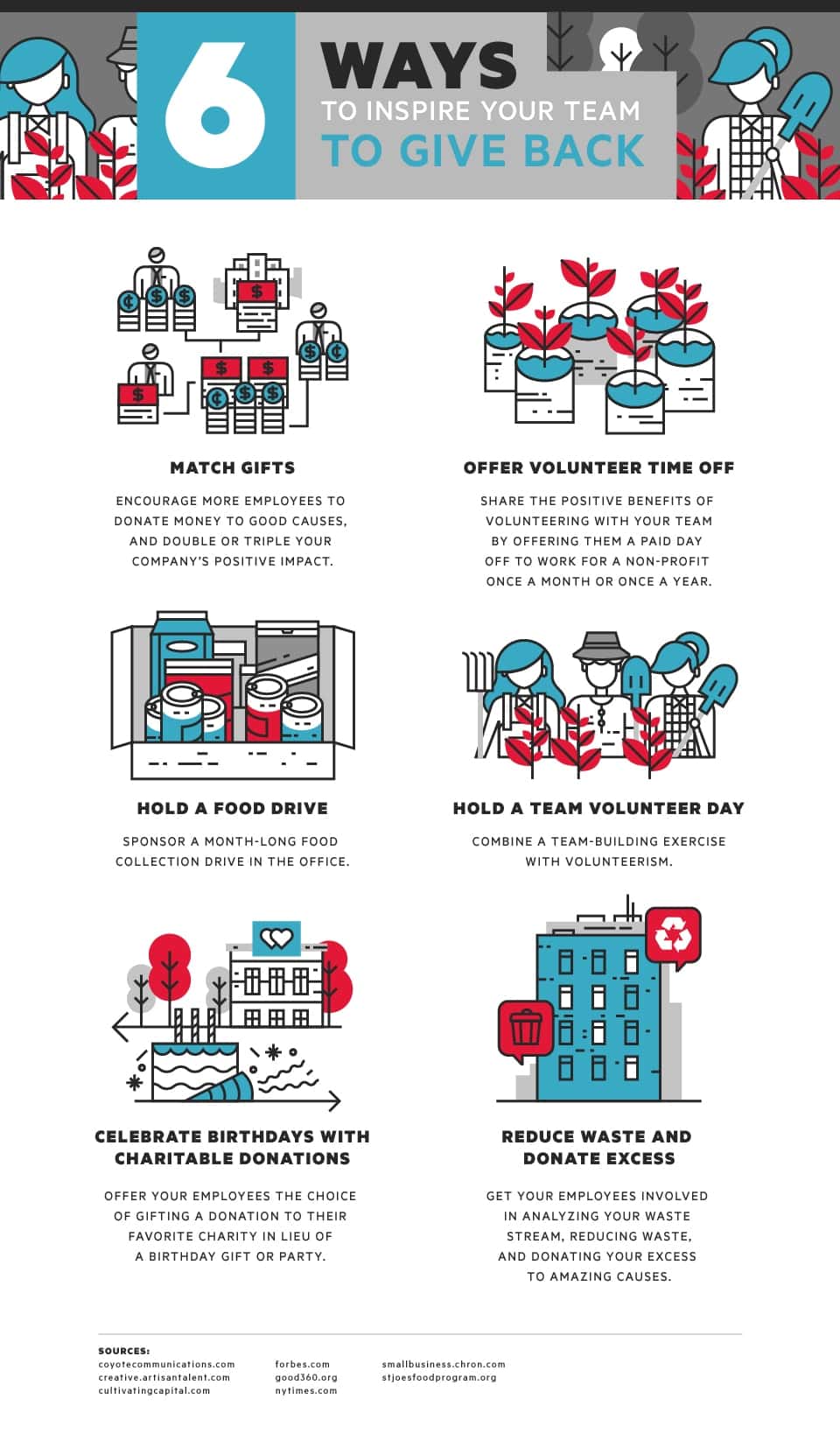
how to give back as a team - corporate giving

Infographic by ZeroCater

Give back with skills, not just money

Donations are valuable, but many nonprofits also need access to skills they cannot easily afford.

A small nonprofit may not have a full marketing team, content strategist, designer, video editor, automation specialist, or SEO expert. Your team may already have those skills in-house.

That creates a powerful opportunity.

Instead of only asking, “How much can we donate?” ask:

What do we know that could help a nonprofit grow?

Your team could help with:

  • Writing donation page copy
  • Improving email newsletters
  • Creating social media posts
  • Designing campaign visuals
  • Recording short volunteer videos
  • Editing nonprofit impact stories
  • Building a simple content calendar
  • Researching better keywords for nonprofit blog posts
  • Creating AI prompts for faster campaign planning
  • Helping a nonprofit understand its audience better

This type of giving often has long-term value. A donation may help once. A better campaign, stronger story, or reusable AI workflow can help a nonprofit again and again.

How AI can help teams support nonprofits faster

AI does not replace human generosity. It helps teams turn that generosity into useful output faster.

For example, a team could spend one afternoon helping a nonprofit create a full month of campaign content. With the right AI workflow, that same afternoon could produce:

  • Email subject line ideas
  • Donor thank-you email drafts
  • Social media captions
  • Blog post outlines
  • Video script ideas
  • Fundraising campaign angles
  • Volunteer recruitment messages
  • Grant summary drafts
  • Website FAQ improvements
  • Short impact story versions for different platforms

The key is to keep the nonprofit’s voice, mission, and real stories at the center.

AI should support the work, not make the message feel generic. Your team can help by reviewing, editing, fact-checking, and making sure every piece of content still sounds human.

Team giving ideas for marketing and communications

Many nonprofits struggle with visibility. They do meaningful work, but not enough people hear about it.

Your team can help close that gap.

Here are practical ways to give back through nonprofit marketing support:

Create a nonprofit content sprint

Choose one nonprofit and help them create a simple content package, such as:

  • 10 social media posts
  • 3 donor email drafts
  • 1 blog post outline
  • 5 short video ideas
  • 1 campaign landing page draft
  • 1 thank-you message for supporters

This gives the nonprofit ready-to-use materials instead of vague advice.

Turn impact stories into campaign assets

Nonprofits often have powerful stories hidden in reports, emails, or volunteer updates.

Your team can help turn one story into:

  • A short blog post
  • A donor email
  • A LinkedIn post
  • An Instagram caption
  • A short video script
  • A quote graphic idea
  • A fundraising campaign hook

One story can become many useful marketing assets when structured well.

Improve a donation page

A donation page should be clear, emotional, and easy to act on.

Your team can review a nonprofit’s donation page and improve:

  • The headline
  • The opening message
  • The call to action
  • The donor impact examples
  • The FAQ section
  • The thank-you message after donating

Small improvements can make the page easier to understand and more persuasive.

Help with short-form video ideas

Many nonprofits know they should create more video content, but they do not know where to start.

Your team can help create simple video ideas such as:

  • “One donor helped make this possible”
  • “A day in the life of our volunteers”
  • “What €10 can help provide”
  • “Before and after community support”
  • “3 myths about our cause”
  • “Why our work matters right now”

The goal is not perfect production. The goal is clear storytelling.

AI-powered giving back activities for your next team day

If your company wants a practical team volunteering activity, try an AI-assisted nonprofit marketing workshop.

Here is a simple structure:

Step 1: Choose one nonprofit

Pick an organization with a clear mission and a real need for communication support.

Step 2: Ask what they need most

Do not assume. Ask whether they need help with fundraising, social media, email, volunteer recruitment, storytelling, or website copy.

Step 3: Create small teams

Divide your team into groups based on skills:

  • Content team
  • AI prompt team
  • Design team
  • Video ideas team
  • Website review team
  • Email team
  • Step 4: Build useful assets

Each group creates practical materials the nonprofit can actually use.

Examples:

  • A social media calendar
  • A donor email sequence
  • A campaign story bank
  • A list of AI prompts
  • A landing page improvement plan
  • A short video script pack
  • Step 5: Review everything with a human eye

AI can help move faster, but final content should always be reviewed for accuracy, empathy, tone, and mission fit.

How teams can help nonprofits use AI responsibly

AI can be a powerful tool for nonprofits, but it should be used with care.

When your team helps a nonprofit use AI, focus on responsible habits from the start.

Good AI support means:

  • Protecting donor and beneficiary privacy
  • Avoiding sensitive personal data in prompts
  • Checking facts before publishing
  • Keeping human review in the workflow
  • Making sure stories are shared with consent
  • Avoiding generic or exaggerated claims
  • Keeping the nonprofit’s real voice intact

The best AI workflows help nonprofits save time without losing trust.

Give back as a team by building reusable nonprofit resources

One of the best ways to help is to create resources the nonprofit can use again later.

Instead of only creating one campaign, your team can build a simple system.

Examples include:

  • A donor email template library
  • A social media caption bank
  • A nonprofit AI prompt library
  • A campaign planning checklist
  • A volunteer recruitment message kit
  • A blog post outline template
  • A monthly content calendar template
  • A storytelling interview guide
  • A donation page copy framework

Reusable resources keep helping long after the team volunteering day is over.

FAQ

How can a team give back to a nonprofit without only donating money?

A team can give back by offering skills such as marketing, writing, design, video editing, SEO, AI workflow support, fundraising campaign planning, or social media help. This can be especially useful for small nonprofits that have limited staff and budget.

How can AI help nonprofits with marketing?

AI can help nonprofits draft emails, plan campaigns, create social media captions, repurpose stories, organize content ideas, and personalize donor communication. Human review is still important to keep the message accurate, ethical, and mission-focused.

What are good team volunteering ideas for nonprofit marketing?

Good team volunteering ideas include creating a nonprofit content calendar, improving donation page copy, writing donor thank-you emails, brainstorming video ideas, building social media posts, and helping the nonprofit create reusable AI prompts for future campaigns.

Can small teams help nonprofits use AI?

Yes. A small team can help a nonprofit create simple AI workflows for content planning, fundraising emails, volunteer communication, and campaign brainstorming. The most useful approach is to create templates and prompts the nonprofit can reuse.

What should teams avoid when helping nonprofits with AI?

Teams should avoid adding private donor data, beneficiary details, or sensitive personal information into AI tools. They should also avoid publishing AI-generated content without fact-checking, editing, and confirming that the tone fits the nonprofit’s mission.

What does it mean to give back as a team?

Giving back as a team involves engaging in charitable activities or community service projects collectively. It’s about leveraging the strength, resources, and spirit of the team to support causes and make a positive impact on the community or environment.

Why should teams consider giving back?

Giving back fosters a sense of purpose, enhances team morale, strengthens relationships among team members, and improves the team’s reputation within the community. It’s a fulfilling way to build team spirit while contributing to societal well-being.

How can a team choose the right cause to support?

Select a cause that resonates with the team’s values and interests. Consider conducting a survey to understand team members’ passions and priorities. It’s essential that the chosen cause aligns with the team’s ethos for maximum engagement and impact.

What are some ways teams can give back?

Teams can volunteer at local charities, participate in community clean-ups, organize fundraising events, donate to causes, mentor youth, or support environmental conservation efforts. The key is to find activities that align with the team’s interests and skills.

How can teams organize a giving back initiative?

Start by setting clear goals and selecting a cause. Then, plan the initiative by assigning roles, organizing logistics, and promoting the event to ensure maximum participation. Don’t forget to track the impact and share the results with the team.

Can remote or virtual teams give back effectively?

Absolutely! Remote teams can engage in virtual volunteerism, such as offering online tutoring, digital skills training, or remote support for nonprofits. They can also participate in virtual fundraising challenges or donate to causes as a team.

How can giving back improve team dynamics?

Giving back as a team can strengthen bonds, improve communication, and boost morale. It provides an opportunity for team members to collaborate outside of their usual roles, fostering a sense of unity and shared purpose.

What are the benefits of involving the whole team in the decision-making process?

Involving everyone in the decision-making process ensures that the activities align with the team’s values and interests, increasing engagement and participation. It also fosters a sense of ownership and commitment to the cause.

How often should a team engage in giving back activities?

The frequency can vary based on the team’s capacity and the nature of the activities. Some teams may choose to organize quarterly events, while others might engage in smaller monthly activities. The key is to maintain a consistent commitment to giving back.

How can teams measure the impact of their giving back efforts?

Teams can measure impact by tracking volunteer hours, funds raised, or the specific outcomes of their activities (e.g., number of trees planted, meals served, or children mentored). Sharing these achievements can motivate the team and demonstrate the value of their efforts.

Check out our latest Content

Articles, Images, Videos, and more!

Get a Christian Coloring Book this Christmas

Christian Coloring Book for Kids

Never get Stuck – Ask the AI Buddy Anything

AI Gardening App

Convert Text into any Case

Free Case Converter

Pros and Cons of Shopping

Online vs Traditional Shopping

Epic YT Title Examples

Fitness YT Title Examples

Earn $2000 a month!

AI Side Hustles from Home

Latest Videos