Social Media Monitoring Tools Nonprofits Should Use In 2024
Your Nonprofit is a champ in Social Media Marketing and your Brand is getting mentions throughout many channels. How do you Monitor Success and reply accordingly? Check out these Social Media Monitoring Tools by Lilian Sue.

What exactly is social monitoring? It’s basically the measurement side of social media content marketing. Social monitoring is the process of watching different online sources for mentions of your organization, whether by name, through branded hashtags or by link. These mentions could come from blogs, websites, online newspapers/media outlets, videos and on various social platforms such as LinkedIn and Twitter.
Related resource: How to create a great social media marketing strategy.
First this: Grow faster than ever before!
Seamlessly blend creativity and technology. See how you can start with AI Marketing and reach your goals faster than ever before. Check out the Tips, Strategies, AI Tools, Masterclass, Courses, and Community. Unleash the true potential of your brand with the help of AI.

Mentions can happen at any time based on the original content you’re sharing from your blog, or content you’ve curated via an e-newsletter or Facebook. Chances are, if you’re putting it out there, there’s going to be people sharing the content on different platforms and mentioning your organization/brand.
Where social monitoring really earns its stripes is when you’re promoting an event, launching a fundraising initiative or influencer campaign and sharing consistent content updates. Your audience will pick up on this, especially if you’re using a branded hashtag and start to share, re-tweet and create their own content using your special hashtag as well. Keeping track of all the mentions, shares and re-tweets during a campaign is nearly impossible without a good tool at your disposal.
Here are a few free/fairly affordable social monitoring tools and how they can benefit non-profits.
Talkwalker Alerts
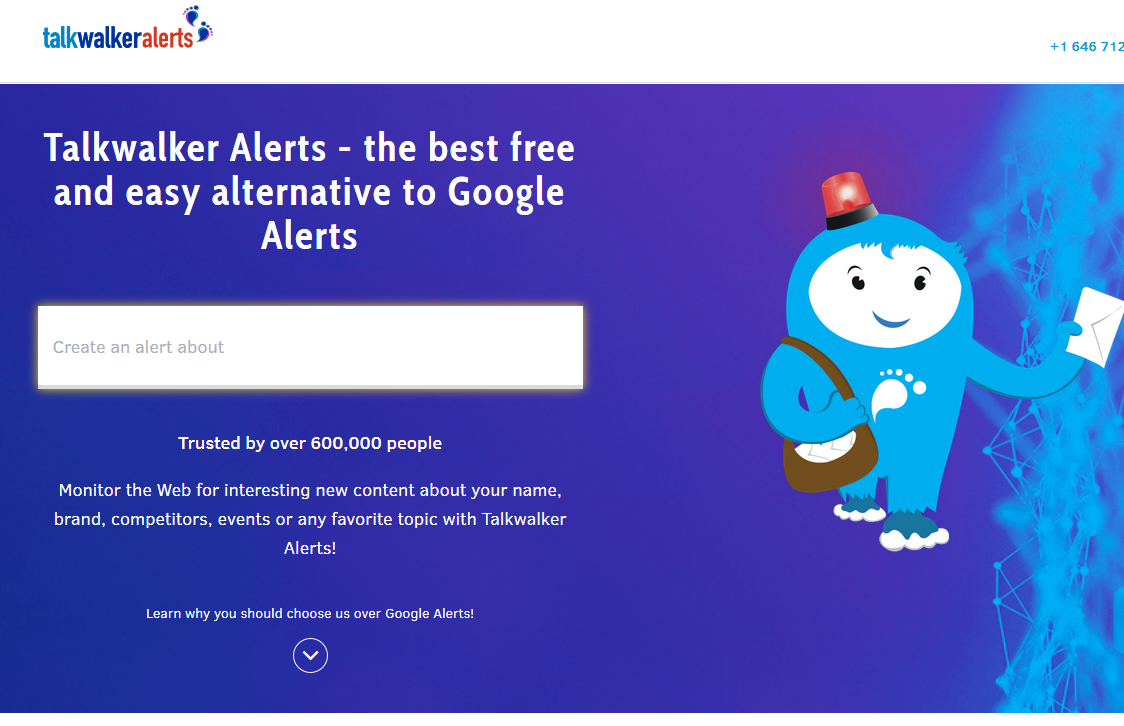
An alternative to Google Alerts, Talkwalker is also available for free and doesn’t send you notification emails one at a time. Talkwalker Alerts scans every available source for brand mentions from websites like Mashable to blogs, forums like Reddit and social media feeds like Twitter and collates all of them for you in one email. It’s a great tool to manage your Social Media presence.
Talkwalker gives you the top results mentioning your brand or keyword (such as the tweets with the most engagement), making them a great free alerts service that includes mentions from social media. You’ll also be able to filter the results you want based on sources, so if you only want blog sources, you can have them. They also offer and allow you to set up how often you’d like to receive alerts in your inbox.
Social Mention
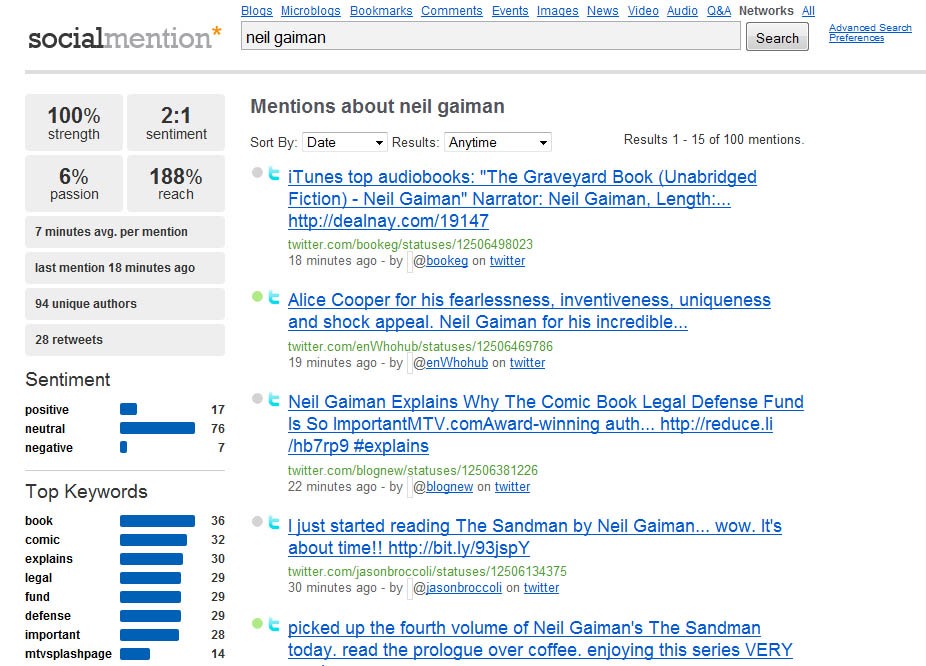
Another free social monitoring tool, Social Mention monitors blogs, microblogs, images, comments, bookmarks, events, audio, Q&A and videos for any mentions of your organization. Mentions are then displayed on the results page and you have the ability to export the results in an RSS feed, email alert or CSV/Excel file. On the left sidebar, you’ll be able to see that Social Mention measures how many re-tweets there were of each mention, how many authors created the content, when the last mention was, how many hours separate each mention and the top keywords, sources, users, hashtags for the results.
In addition, the sidebar also tells you whether the sentiment is positive or negative and what the strength, reach and passion is for all the mentions. In other words, the tool will calculate how far each mention has reached, whether audiences feel passionate about the content and how strong it is based on the number of people that interact with it.
Twilert
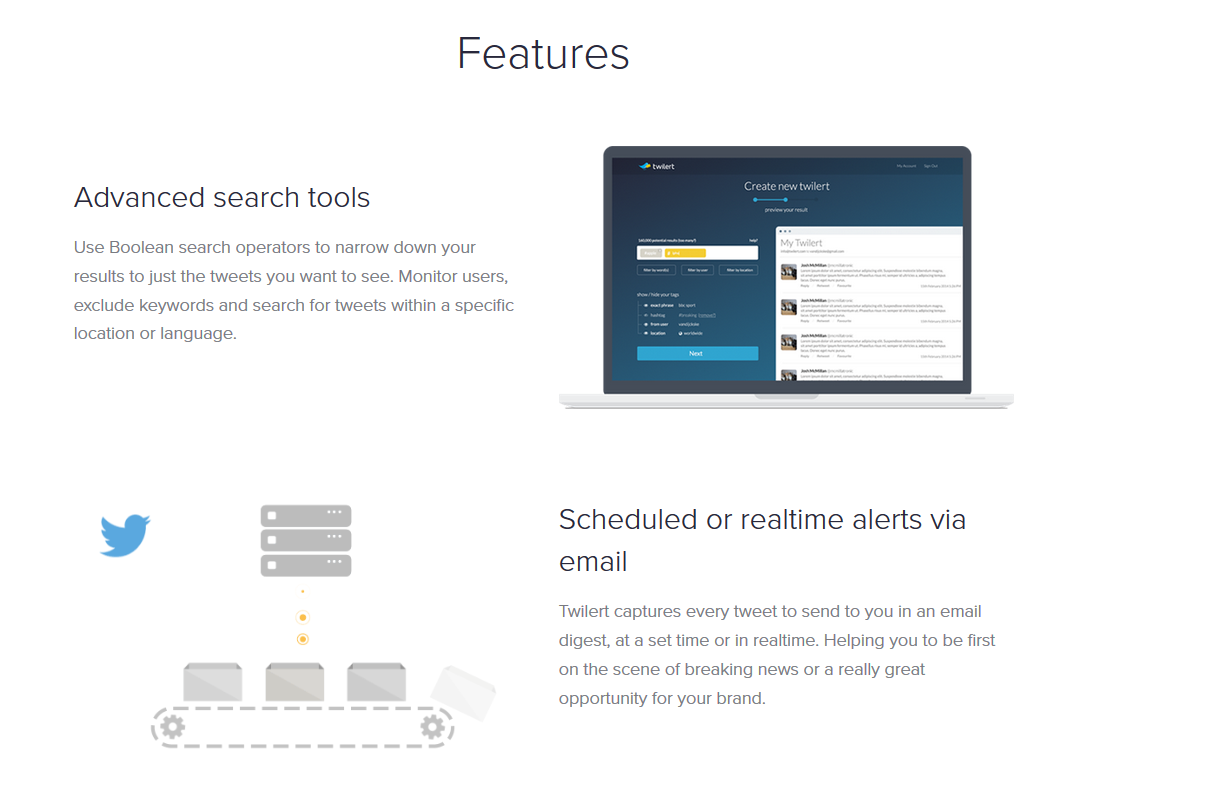
An affordable and easy to use monitoring tool for Twitter, Twilert captures all brand mentions on the platform, including those that have URLs, contain keywords and branded hashtags. You can also set it up to record mentions in real time as well, making sure nothing falls under the radar. The advanced Boolean search options allow you to execute deeper searches into the tweets you want to see, letting you monitor users, exclude/include keywords and search for specific tweets based on language or location.
Every tweet is sent to you via email digest and the search history and email digest will keep of all the important tweets, allowing you to return them any time you like. You can also monitor multiple brand accounts and searches simultaneously and email the digests to pre-determined groups.
Not only does Twilert help you monitor brand mentions but it can help you generate new fundraising opportunities and guest-posting spots on different blogs to raise your organization’s profile. Email alerts sent straight to your inbox can also help you answer potential donor questions, even if they forget to tag your account. The most popular option is the Pro package which is $19/month but allows you to create 20 alerts and have unlimited alert emails as well as searchable history and the ability to export mentions in RSS feeds.
MentionLytics
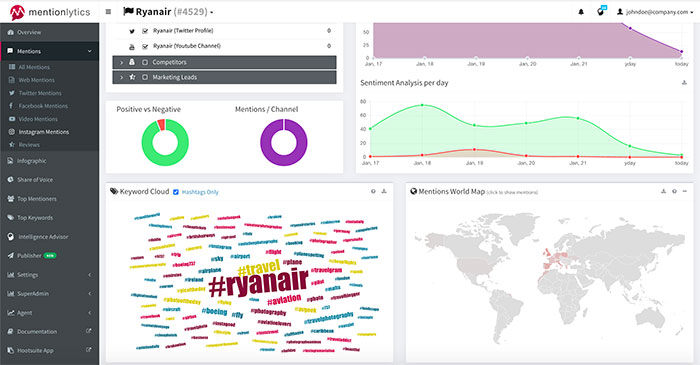
Mentionlytics is a popular social media analytics tool for businesses and brands to keep track of brand or product mentions across social media sites.
From start-ups to multinational businesses and public figures to agencies, anyone can use the tool for online reputation management, hashtags tracking, lead generation, competitor analytics, searching digital marketing influencers, and more.
Apart from analytical data and statistical reports, Mentionlytics offers a unique feature called ‘Social Intelligence Advisor’. This AI-powered feature runs an algorithm to uncover brand mentions and other useful reports. Not only this, but SIA also gives deep insights into the reports to allow brands to use it. One can also seek advice on how to make the most out of the reports from the experts.
Getting started with Mentionlytics is fairly easy and quick – explore the tool to get started.
SocialClout
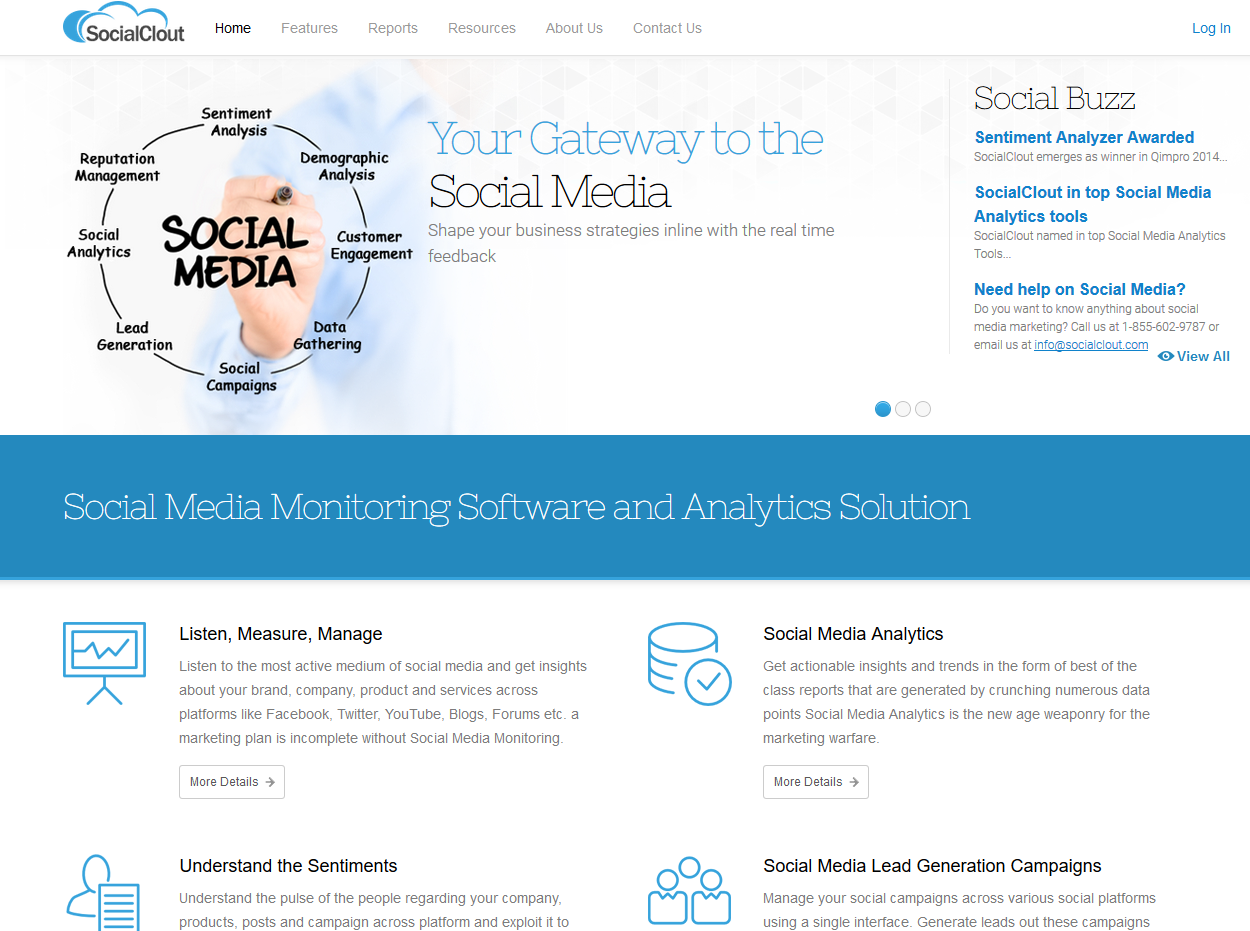
With SocialClout, you’ll have the ability to monitor social conversations with real-time coverage on Facebook, LinkedIn, Twitter, Instagram and YouTube. The keyword search functionality will allow you to track a campaign hashtag, brands, services and even other organizations being mentioned on various networks.
Insightful reports analyze numerous data points and allow you to see all the status updates from each social platform as well as the geographics and demographics of where the conversations about your campaigns & organizations are happening. The automated sentiment analysis helps you identify who your brand advocates/key influencers are and if there are any negative sentiments surrounding your brand.
With the Starter Plan, you can get 30 days of extra validity for $49 USD that will allow you to add up to 5 social media accounts & 5 different platforms. You’ll also be able to generate up to 7 in-depth reports and analyze up to 4 competitor profiles with priority email support to help you when you’re stuck. Any time you get stuck, SocialClout has dozens of tutorials, blog posts and email/chat support to answer any questions you might have.
Jump back to a section
FAQ
What Are Social Media Monitoring Tools for Nonprofits?
Social media monitoring tools for nonprofits are software applications designed to track and analyze social media activity related to the organization, including mentions, audience engagement, and campaign performance.
Why Are Social Media Monitoring Tools Important for Nonprofits?
These tools are important for understanding audience engagement, measuring the impact of social media campaigns, managing online reputation, and gaining insights to inform future strategies.
What Key Features Should Nonprofits Look for in Social Media Monitoring Tools?
Key features include the ability to track mentions and keywords, analyze engagement data, monitor multiple platforms, receive real-time alerts, and generate comprehensive reports.
How Can Nonprofits Use Social Media Monitoring to Enhance Their Campaigns?
Nonprofits can use monitoring tools to gauge the effectiveness of their campaigns, identify which types of content resonate with their audience, and adjust strategies based on real-time feedback.
Can Social Media Monitoring Tools Help Nonprofits in Fundraising Efforts?
Yes, these tools can identify fundraising opportunities, track the success of fundraising campaigns, and engage with potential donors through social listening.
What Are Some Affordable or Free Social Media Monitoring Tools for Nonprofits?
Affordable or free tools include Hootsuite, TweetDeck, Google Alerts, and Social Mention. These offer basic monitoring capabilities suitable for nonprofits with limited budgets.
How Can Nonprofits Measure Engagement and Reach with These Tools?
Nonprofits can measure engagement by tracking metrics like likes, shares, comments, and mentions, and measure reach by analyzing the spread of their social media content across platforms.
Can Social Media Monitoring Tools Track Volunteer and Donor Sentiment?
These tools can track volunteer and donor sentiment by analyzing the tone and context of social media conversations, helping nonprofits understand public perception and adjust messaging accordingly.
How Do Social Media Monitoring Tools Aid in Crisis Management for Nonprofits?
In crisis situations, monitoring tools can provide real-time alerts about emerging issues, enabling nonprofits to quickly respond, manage their reputation, and communicate effectively with their audience.
What Role Do These Tools Play in Understanding a Nonprofit’s Audience Demographics?
Social media monitoring tools can provide valuable insights into a nonprofit’s audience demographics, such as age, location, and interests, helping tailor content and outreach strategies to specific segments.
How Can Nonprofits Use Social Media Monitoring to Identify Key Influencers and Advocates?
Nonprofits can use these tools to identify individuals who frequently engage with their content or mention their cause, helping to pinpoint potential influencers and advocates for collaboration or outreach.
What Is the Importance of Hashtag Tracking for Nonprofit Social Media Campaigns?
Hashtag tracking is important for understanding the reach and impact of specific campaigns or topics, enabling nonprofits to engage in relevant conversations and gauge public interest.
Can Social Media Monitoring Tools Help in Content Planning?
Yes, by analyzing popular topics and audience engagement, these tools can inform content planning, ensuring that future posts align with audience interests and trending discussions.
How Do Nonprofits Ensure Data Privacy Compliance When Using Social Media Monitoring Tools?
Nonprofits must choose tools that comply with data privacy laws, use data ethically, and be transparent with their audience about data usage, especially when monitoring or collecting user information.
What Challenges Might Nonprofits Face When Using Social Media Monitoring Tools?
Challenges include managing the volume of data, interpreting the insights correctly, ensuring the chosen tool integrates well with their existing systems, and budget constraints for advanced features.
How Can Real-Time Monitoring Benefit Nonprofit Event Management?
Real-time monitoring can provide instant feedback on event engagement, help address any concerns or questions as they arise, and gauge the overall online success of the event.
Are There Industry-Specific Social Media Monitoring Tools for Nonprofits?
While most tools are versatile, some are tailored for specific sectors, offering features and analytics relevant to common nonprofit objectives and audiences.
How Does Sentiment Analysis in Social Media Monitoring Benefit Nonprofits?
Sentiment analysis helps nonprofits understand the public’s feelings towards their brand or campaigns, allowing them to address concerns, capitalize on positive sentiment, and adjust strategies accordingly.
Can Social Media Monitoring Tools Integrate with Other Nonprofit Management Software?
Many social media monitoring tools offer integration capabilities with CRM systems, email marketing platforms, and other nonprofit management software, providing a more holistic view of engagement and interactions.
What Role Do Visual Analytics Play in Social Media Monitoring for Nonprofits?
Visual analytics, such as graphs and heat maps, can make it easier to understand and communicate social media trends, engagement patterns, and campaign performance to stakeholders.
How Can Nonprofits Use Social Media Monitoring to Improve Donor Engagement?
Nonprofits can track donor interactions and feedback on social media, identify what content appeals to donors, and use these insights to tailor communication and engagement strategies.
What Strategies Can Nonprofits Employ to Maximize the Benefits of Social Media Monitoring?
Maximize benefits by setting clear objectives for monitoring, regularly reviewing and adjusting strategies based on insights, and integrating findings across marketing and communication plans.
How Important is Frequency in Social Media Monitoring for Nonprofits?
Regular monitoring is essential to keep up with real-time conversations, track the effectiveness of social media campaigns, and respond promptly to any mentions or inquiries.
Can Social Media Monitoring Tools Help in Understanding the Impact of a Crisis on a Nonprofit?
Yes, these tools can track public sentiment and the volume of conversations during a crisis, helping nonprofits understand the impact and shape appropriate response strategies.
How Can Nonprofits Leverage Automated Alerts in Social Media Monitoring?
Automated alerts notify nonprofits of significant mentions, trends, or shifts in sentiment, enabling quick responses to emerging opportunities or potential issues.
What Are the Best Practices for Responding to Negative Feedback Discovered Through Social Media Monitoring?
Respond promptly, professionally, and empathetically to negative feedback, and seek to resolve any issues, demonstrating the nonprofit’s commitment to its audience and values.
How Can Nonprofits Ensure They Are Not Overwhelmed by the Volume of Data from Social Media Monitoring?
Focus on key metrics aligned with organizational goals, use tools that offer concise and actionable insights, and avoid getting sidetracked by non-essential data.
Can Social Media Monitoring Influence Future Nonprofit Programs or Initiatives?
Insights gained from monitoring can inform the development of future programs by revealing audience needs, interests, and gaps in current offerings.
What Role Does User Behavior Analysis Play in Social Media Monitoring for Nonprofits?
Analyzing user behavior helps understand how audiences interact with content, what drives engagement, and how to optimize posting schedules and content types.
How Can Nonprofits Balance Between Automated Monitoring and Personal Engagement on Social Media?
Balance automated monitoring for efficiency with personal engagement to build genuine relationships, ensuring responses and interactions are authentic and reflective of the nonprofit’s values.
Author Bio:
 Lilian Sue is a marketing communications professional with over 10 years of experience developing integrated multi-channel marketing campaigns (copywriting, social media & PR/media relations) for lifestyle brands, indie film & television projects, B2B companies, tourism/hospitality & food/beverage brands. Learn more about her work at In Retrospect Writing Services.
More Tools to Help you reach your Goals Faster
- Best AI Pinterest Description Generators
- Best AI Instagram Caption Generators
- Top Social Media Marketing Tools for Nonprofits
- Best AI Social Media Caption Generators
- Best AI LinkedIn Caption Generators
- Best AI Facebook Caption Ganarators
- Best AI Twitter Caption Generators
- Best AI TikTok Caption Generators
Improve your Marketing with the Power of AI
See how you can start with AI Marketing and reach your goals faster than ever before. Check out the Tips, Strategies, AI Tools, Masterclass, Courses, and Community. Unleash the true potential of your brand with the help of AI.