Top Artificial Intelligence Books To Stay Up to Date With the Latest

Embark on a journey through the world of AI. Learn why reading AI books is essential for understanding this transformative technology, staying ahead in your career, and sparking innovation.

best books

Let’s unravel the fascinating world of Artificial Intelligence (AI)! As AI continues to revolutionize our world, shaping everything from the way we work to how we live our daily lives, it’s crucial to understand this groundbreaking technology. Whether you’re a seasoned tech professional, a budding AI enthusiast, or simply curious about the future of technology, AI books are your gateway to a deeper understanding of this dynamic field.

Let’s delve into why reading AI books is not just a pursuit of knowledge but a journey into the future of innovation. From grasping the fundamentals to exploring the ethical dimensions of AI, we’ll highlight how these books can enrich your knowledge, enhance your career prospects, and even inspire the next big idea in tech. So, buckle up as we embark on this exciting exploration of AI through the pages of books, where each chapter brings us closer to understanding the true potential and challenges of this transformative technology.

Let’s dive in!

Lineup of Top Artificial Intelligence (AI) Books
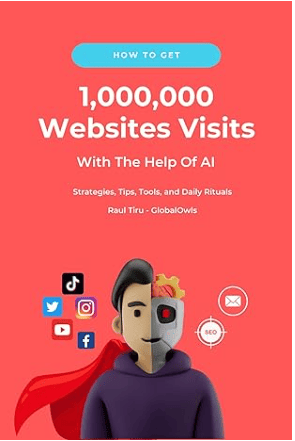
How To Get 1,000,000 Websites Visits With The Help Of AI: Strategies, Tips, Tools, And Daily Rituals

How To Get 1000000 Websites Visits With The Help Of AI Strategies, Tips, Tools, And Daily Rituals Book

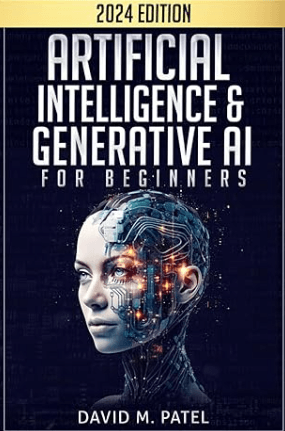
Artificial Intelligence & Generative AI for Beginners: The Complete Guide

Artificial Intelligence & Generative AI for Beginners The Complete Guide Book by David M Patel

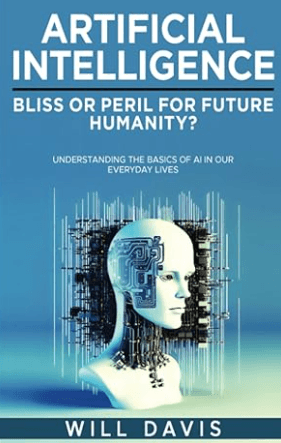
Artificial Intelligence: Bliss or Peril for Future Humanity?: Understanding the Basics of AI in Our Everyday Lives

Artificial Intelligence Bliss or Peril for Future Humanity Understanding the Basics of AI in Our Everyday Lives Book

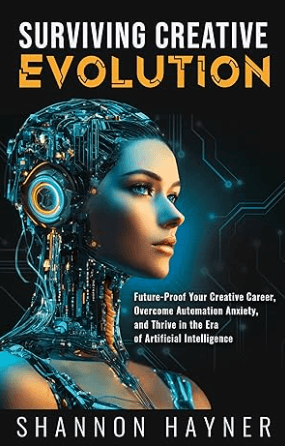
Surviving Creative Evolution: Future-Proof Your Creative Career, Overcome Automation Anxiety, and Thrive in the Era of Artificial Intelligence

Surviving Creative Evolution Future-Proof Your Creative Career, Overcome Automation Anxiety, and Thrive in the Era of Artificial Intelligence Book

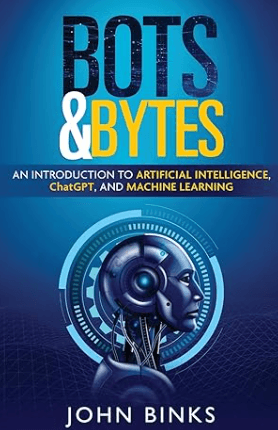
Bots & Bytes: An Introduction to Artificial Intelligence, ChatGPT, and Machine Learning

Bots & Bytes An Introduction to Artificial Intelligence, ChatGPT, and Machine Learning Book by John Binks

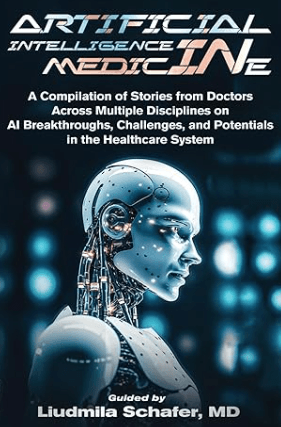
Artificial Intelligence in Medicine: A Compilation of Stories from Doctors Across Multiple Disciplines on AI Breakthroughs, Challenges, and Potentials in the Healthcare System

Artificial Intelligence in Medicine A Compilation of Stories from Doctors Across Multiple Disciplines on AI Breakthroughs, Challenges, and Potentials in the Healthcare System

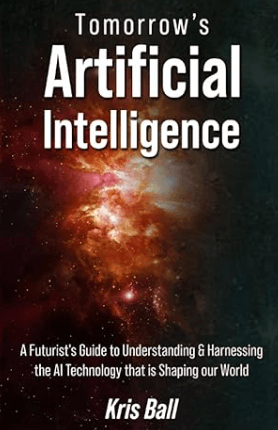
Tomorrow’s Artificial Intelligence: A Futurist’s Guide to Understanding and Harnessing AI Technology That Is Shaping Our World

Tomorrow's Artificial Intelligence A Futurist's Guide to Understanding and Harnessing AI Technology That Is Shaping Our World Book

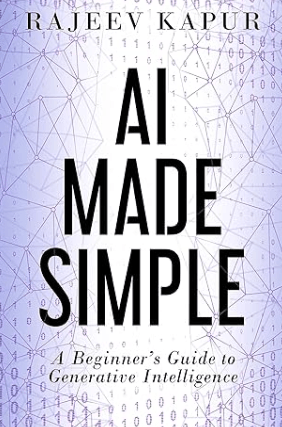
AI Made Simple: A Beginner’s Guide to Generative Intelligence

AI Made Simple A Beginner’s Guide to Generative Intelligence Book by Rajeev Kapur
Artificial Intelligence Books at a Glance
Category Ideal Reader Key Takeaway Best Use Case Typical Length
Machine Learning Guides Students, developers Hands-on coding and models Building ML projects 300–400 pages
Deep Learning Researchers, engineers Neural networks and AI systems Advanced applications 320–450 pages
AI in Business Leaders, managers How AI drives growth Strategy and adoption 230–320 pages
AI Ethics & Society Policymakers, educators Balancing progress with responsibility Policy debates, public awareness 200–300 pages
General Audience Introductions Curious readers Plain-language overview Big-picture learning 220–300 pages
History of AI Historians, enthusiasts AI’s evolution over decades Contextual understanding 250–350 pages
Robotics & Automation Engineers, innovators AI applied to physical systems Manufacturing, healthcare 250–350 pages
AI & Data Science Analysts, scientists Integrating AI with data workflows Predictive analytics 280–360 pages
Futurism & AI Visionaries, futurists Speculating on AI’s impact Future of work and society 220–300 pages
Beginner-Friendly Guides Non-tech readers Understanding AI without jargon Entry-level learning 180–250 pages
Notes: Artificial intelligence books range from coding manuals to societal reflections. A balanced approach is reading one technical book and one ethics-focused title.

How Artificial Intelligence (AI) Books help you stay Up to Date
How Artificial Intelligence (AI) Books help you stay Up to Date

Reading AI (Artificial Intelligence) books is highly beneficial for several reasons:

Understanding the Basics and Beyond: AI is a complex and multifaceted field. Books provide foundational knowledge and delve into advanced topics, making them ideal for both beginners and experts.

Keeping Up with Rapid Advancements: AI is evolving rapidly, with new developments happening constantly. Reading AI books helps individuals stay informed about the latest technologies, algorithms, and methodologies.

Enhancing Career Prospects: For professionals in tech or related fields, understanding AI is becoming increasingly essential. Knowledge of AI can open up new career opportunities and paths for advancement.

Developing Critical Skills: AI books often cover problem-solving and critical thinking in the context of machine learning, neural networks, and more, skills that are highly valuable in today’s job market.

Fostering Innovation: Learning about AI can spark new ideas and inspire innovative approaches to both technology and business challenges.

Understanding Ethical and Social Implications: AI books also delve into the ethical and societal impacts of AI, a crucial aspect for anyone involved in technology to understand and consider.

Broadening Perspective: Reading about AI can provide insights into how AI is being used across different industries, from healthcare to finance, broadening one’s understanding of the world.

Frequently Asked Questions

Who should read artificial intelligence books?

They’re for developers, researchers, entrepreneurs, students, policymakers, and curious readers who want to understand AI’s impact on society and business.

What topics do AI books cover?

They range from technical guides on machine learning and deep learning to big-picture explorations of ethics, automation, and the future of work.

Are AI books only for tech experts?

No. Many beginner-friendly titles explain AI concepts in plain language, while advanced books dive deep into algorithms and coding.

Do these books include coding examples?

Yes. Some AI books are hands-on with Python or R examples, while others are more conceptual and strategy-focused.

Can artificial intelligence books help with career growth?

Absolutely. AI is one of the most in-demand fields, and books can help you build technical skills or strategic understanding.

Are there books on the ethics of AI?

Yes. Many explore topics like algorithmic bias, data privacy, and responsible innovation.

Do these books discuss AI in business?

Yes. Some focus on how companies can adopt AI to improve efficiency, customer service, and decision-making.

How long are most AI books?

They typically range from 250 to 400 pages, equal to 8 to 14 hours of reading.

Are there AI books for non-technical readers?

Yes. Titles for general audiences focus on history, real-world applications, and social impact.

Do AI books get outdated quickly?

Some technical guides may age as tools evolve, but books on principles, ethics, and strategy remain valuable longer.

Are there books about the history of AI?

Yes. Some trace AI’s journey from early computing to modern breakthroughs like GPT and neural networks.

Do these books cover robotics and automation?

Yes. Many explore how AI and robotics intersect in manufacturing, healthcare, and everyday life.

Can students use AI books for study?

Definitely. Many are recommended in computer science and business courses.

Are audiobooks available for AI titles?

Yes. Many are available as audiobooks, though technical diagrams are often easier to grasp in print or ebook formats.

How do I choose the right AI book?

Decide based on your goal, whether it’s learning coding, understanding AI ethics, exploring applications, or seeing where the future is headed.