Top 12 Amazon Keyword Research Tools for 2024 [Start for Free]
Keywords are fundamental to digital marketing strategies since they allow websites and listings to rank for them. Here are the Top 12 Amazon keyword research tools you need in 2024.

Keyword research is the main focus when looking for ways to increase organic traffic. Using keywords in posted content helps to rank up on the search engine results page (SERP). No wonder keyword research has become the most effective marketing strategy online. Keywords have become the basis of marketing tools such as Search Engine Marketing (SEM) and Search Engine Optimization (SEO).
As an Amazon seller, keyword research tools help you boost your rankings and sales. Free versions, paid versions, and free trials are available for said tools.
First this: Grow faster than ever before!
Seamlessly blend creativity and technology. See how you can start with AI Marketing and reach your goals faster than ever before. Check out the Tips, Strategies, AI Tools, Masterclass, Courses, and Community. Unleash the true potential of your brand with the help of AI.

Top 10 Amazon Keyword Research Tools for 2023
- Les 10 meilleurs outils de recherche de mots clés Amazon pour 2023
- 1.Semrush
- 2. Google Planificateur de mots clés
- 3. Outil de mots clés
- 4. Hélium10
- 5. Espionner
- 6. Ahrefs
- 7. Bonjour
- 8. Application du vendeur
- 9. AMZ Un
- 10. Scout de la jungle
- 11. MozPro
- 12. Malheur
- Que sont les outils de recherche de mots clés Amazon
- Avantages de l'utilisation des outils de recherche de mots clés Amazon
- Meilleures pratiques pour l'utilisation des outils de recherche de mots clés Amazon
- QFP
- Plus d'outils pour vous aider à atteindre vos objectifs plus rapidement
1. Semrush
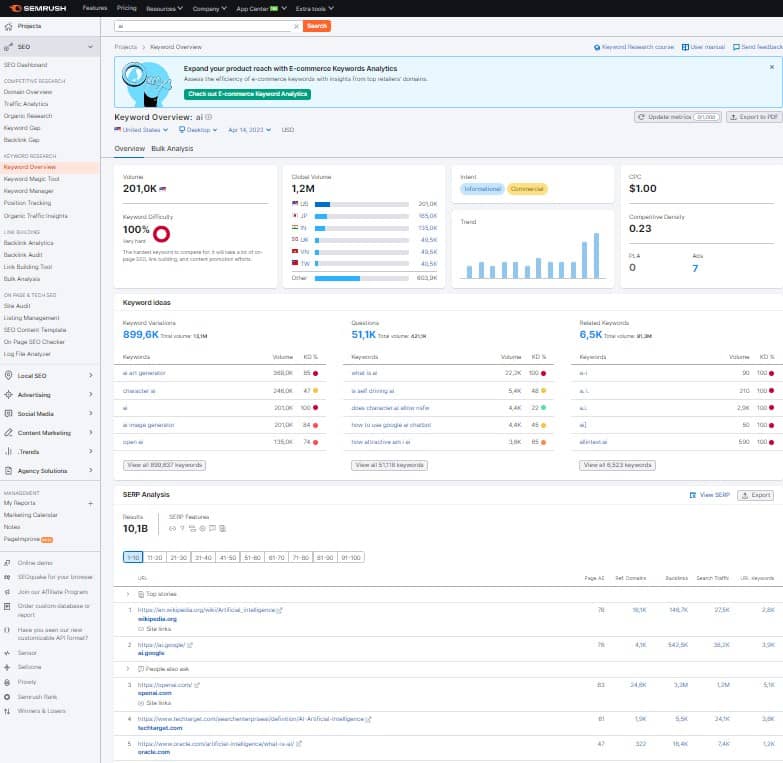
Semrush was included in Forbes for SEM this 2022, along with the other most popular keyword research tools such as Google Ads Keyword Planner and Google Trends.
Semrush is a software that offers not one keyword research tool but six! Keyword Overview, Organic Research, Keyword Magic Tool, Keyword Gap, Keyword Manager, and Organic Traffic Insights.
You can purchase them separately or as an SEO Toolbox. There’s a free trial offer as well. With a 13-year of experience under their belts, Semrush is worth the price.
At GlobalOwls, we’ve partnered with Semrush to provide you not a 7, but a 14-day free trial. That should be enough time to get the keywords you need to grow your Amazon listing and get the hang of how Semrush works.
A credit card is required for them to ensure people don’t just create free accounts each time their trial ends but you can cancel your free trial at any time.
2. Google Keyword Planner
Google Keyword Planner is one of the digital marketing tools under Google Ads services. You can use it for free if you’re registered with Google Ads.
Though primarily an Ads feature, it’s useful for SEO too. The keyword planner offers keyword suggestions and gives data about the number of searches per month on your chosen keywords. You can also organize keywords according to categories and generate relevant keywords from a seed keyword.
3. Keyword Tool
Popularly known as KeywordTool.io, Keyword Tool is a cloud-based software which means it’s not required to download it. They offer an Autocomplete feature that limits and targets specific domains like Amazon, Bing, eBay, and the like. You can then click on the Amazon logo for a targeted search on Amazon product listings.
You need to pay to view the complete results that include:
- the total number of keywords
- total search volume
- average trend
- average CPC cost (in USD)
- average competition
Overall, a great tool, especially for those starting a business and wondering what to sell on Amazon FBA or other e-commerce platforms.
4. Helium10
Helium10 is one of the first software designed for Amazon use. It has established itself as one of the most indispensable tools in the industry. This all-in-one program offers product research, analytics, marketing and operations support, listing optimizations, and keyword research.
They have three tools under keyword research: Cerebro (for ASINs), Magnet (keyword opportunities for Amazon and Walmart), and Misspellinator (which shows the commonly misspelled versions of keywords). Registration is free and they have a limited free version. Subscription plans start at $29 to $209 per month.
5. Spyfu
Spyfu is the best for competitor-directed keyword research. It tracks their bought keywords on Google Ads, organic ranking, and even ad variations for the past 16 years.
It’s a great tool to check what worked for your competitors and how you can learn from their mistakes. Just put in their domain name! You can also type in your domain and check which keywords competitors have bought but you haven’t.
They have a monthly membership of $33 that already allows you unlimited data and downloads.
6. Ahrefs
This is one of the most comprehensive options available for keyword research and is similar to Semrush. It’s a cloud-based software that requires no downloads and presents data in real time. Its key features include Site Audit, Site Explorer, Content Explorer, Rank Tracker, and Keyword Explorer.
Ahref’s Keyword Explorer is a tool with billions of words in its database. Data analyzed include keyword difficulty (how many backlinks are needed to rank up), search volume (both by country and globally), and the number of clicks with corresponding CPC rates (both paid and organic).
It can also provide other keyword metrics like the number of searches (organic and paid), backlink trends, ad campaigns used, and the cost of bids. Ahrefs Site Explorer allows you to reverse engineer competitors’ strategies and learn about them.
They have a monthly rate that ranges from $99 to $999.
7. Aihello
AiHello is a comprehensive Amazon PPC software that offers a suite of tools designed to streamline keyword research and campaign optimization. It features keyword harvesting and mining, automated bidding, and placement optimization to help sellers discover high-performing keywords and maximize their ad spend. With its user-friendly interface and array of features, AiHello empowers sellers of all levels to efficiently manage their Amazon PPC campaigns and achieve better results.
8. SellerApp
SellerApp would be the keyword research tool in terms of product listing optimization. It presents the top converting keywords and not just relevant keyword suggestions.
SellerApp gives you data on the keywords with the highest conversion rates, search volume, and CPC rates of keywords you want to target. It includes relevance scores, impression rates, and keywords your competitors use.
You can sign up for a free trial or choose from a Pro-Lite plan at $89 per month or a Professional plan at $149 per month.

9. AMZ One
One way to protect your brand on Amazon is to monitor your seller account health as often as necessary.
With AMZ One, you can check a product’s daily ranking using the keyword ranking tracker. Meanwhile, the keyword research tool allows reverse ASIN lookup and provides search volume and purchase volume metrics.
The basic plan starts at $20 per month and is limited to 100 keywords and unlimited keyword research, among others. It goes up to premium plans unlocking unlimited versions of other features.
10. Jungle Scout
Jungle Scout can both be web-based and downloadable. The keyword scout research tool is under the web-based programs and shows search volume trends (in both 30- and 90-day options), PPC bids (both exact and broad bidding), dominant category of the keyword, and ease of rank. You can easily compare your products with competitors and get information about rankings and traffic metrics for the past two years. Plans start from $29 to $84 per month.
11. Moz Pro
Another frequently mentioned SEO program is Moz. Moz started on 2004 and expanded to be an all-in-one SEO toolset. Now, it has Moz Pro which is centered more on the marketing aspects of SEO. Features include site audit, link crawling, rank tracking, and keyword research.
Their research tool is Keyword Explorer and includes the following metrics: search volume, difficulty, CTR, keywords suggestions, SERP analysis, and even a priority score which tells you how important a keyword is for your business.
Plans range from $99 to $599 per month. But, if you create an account for their site, you get ten free queries per month.
12. Wope
Wope is another tool that offers solutions for keyword research. It allows users to monitor relevant keywords and detect mobile page issues.
The setup process only takes 60 seconds, and a smart competitor finder can speed up competitor monitoring. You can quickly complete the keyword research process for Amazon thanks to Wope’s customizable keyword tracking and historical ranking tracking.
Seasonality solution helps users to spot keywords’ seasonality and trends. Apart from these, this tool lets you know the best rank spotter by analyzing the history of the ranking.
Wope offers a 14-day free trial and a customizable pricing plan.
For some honorable mentions, we have:
- Ubersuggest is considered the best free access keyword tool for 2023.
- AnswerThePublic which shows the keyword generations in a creative visual display that some users might prefer.
What are Amazon Keyword Research Tools

Keyword research is a crucial element of any successful marketing campaign, and this is especially true for Amazon sellers. Amazon keyword research tools are essential for optimizing product listings, generating traffic, and driving sales.
Amazon keyword research tools are software solutions that help Amazon sellers identify the most relevant and popular keywords to use in their product listings. These tools analyze search queries, customer behavior, and other factors to provide valuable insights into keyword search volume, competition, and relevance. By using these tools, sellers can optimize their product listings and make them more discoverable to potential customers.
As discussed earlier, there are various Amazon keyword research tools available in the market, each with its unique features and benefits.
Benefits of Using Amazon Keyword Research Tools

The benefits of using Amazon keyword research tools are numerous. Here are some of the most significant advantages:
- Improved visibility: By using high-traffic and relevant keywords in your product listings, you can increase your visibility on Amazon and attract more potential customers.
- Better conversion rates: By using keywords that accurately describe your products, you can attract customers who are more likely to convert, leading to better sales and revenue.
- Reduced advertising costs: By using relevant and high-traffic keywords in your product listings, you can reduce the cost of advertising by improving your organic rankings.
- Increased competitiveness: By using keyword research tools, you can identify keywords that your competitors are not using, giving you a competitive advantage and helping you stand out in a crowded marketplace.
Amazon keyword research tools are an essential part of any successful Amazon marketing campaign. They provide valuable insights into customer behavior, search queries, and competition, making it easy to optimize your product listings and improve your visibility, conversion rates, and competitiveness. By using these tools, Amazon sellers can stay ahead of the competition and achieve their marketing goals.
Best Practices for Using Amazon Keyword Research Tools

It is not enough to simply use Amazon Keyword Research Tools – it’s also essential to follow best practices for optimizing your product listings. Let’s explore the best practices for using Amazon keyword research tools to improve your rankings, visibility, and sales.
Start with seed keywords
Before diving into more in-depth research, it’s crucial to start with a list of seed keywords that are relevant to your product. These can be the product name, category, or features. Use these seed keywords as a foundation for your research and expand your list based on the suggestions provided by the Amazon keyword research tools.
Focus on long-tail keywords
Long-tail keywords are more specific and typically have lower search volume, but they are also less competitive. By targeting long-tail keywords, you can attract more qualified traffic to your product listings, leading to higher conversion rates and sales. Amazon keyword research tools can help you identify relevant long-tail keywords to use in your product listings.
Consider relevancy and competition
When selecting keywords to use in your product listings, consider both the relevancy and competition of the keywords. Relevancy refers to how closely the keyword matches your product, while competition refers to how many other sellers are targeting the same keyword. It’s important to strike a balance between relevancy and competition to optimize your rankings and visibility.
Analyze customer search terms
Amazon keyword research tools can provide valuable insights into customer search behavior, including the search terms they use and the products they purchase. Analyzing these search terms can help you identify trends, patterns, and opportunities to optimize your product listings and improve your sales.
Optimize your product listing
Once you have identified the relevant and high-traffic keywords to use in your product listings, it’s crucial to optimize your listings accordingly. This includes using the keywords in the product title, description, bullet points, and backend keywords. However, it’s important not to overuse keywords and maintain a natural and compelling product description that encourages customers to buy.
Monitor and update your keywords
Amazon keyword research is an ongoing process, and it’s important to monitor your rankings and update your keywords regularly. This includes tracking the performance of your product listings and adjusting your keywords based on changes in search behavior, competition, and market trends.
Using Amazon keyword research tools is essential for optimizing your product listings and driving sales on the platform. By following best practices such as starting with seed keywords, targeting long-tail keywords, considering relevancy and competition, analyzing customer search terms, optimizing your product listings, and monitoring and updating your keywords, you can improve your rankings, visibility, and sales on Amazon. With the right approach, Amazon keyword research tools can be a powerful tool in your marketing arsenal.
Conclusion
There’s no perfect universal Amazon keyword research tool. Fortunately, we have a diverse selection of tools that offer similar features presented in different ways. It’s still up to users and businesses to find the programs that fit best with them and their workflows.
Choose the tool that is the most system compatible with yours and within your budget. If you can’t afford to subscribe to a monthly plan, take advantage of the free tools. You’re not required to commit or make a decision right away. Try as many keyword research tools as you can then see what’s the best fit for you!
Author’s Bio
 Jayce is the managing director of Seller Interactive, an Amazon advertising agency committed to building brands on Amazon. His content marketing expertise has led him to work with brands such as Toyota and GoDaddy, producing content that has reached over 20M views in a month. He is ready to assist D2C brands by offering services in the Amazon DSP program to PPC management.
FAQ
What Are Amazon Keyword Research Tools?
Amazon Keyword Research Tools are software solutions designed to help sellers on Amazon find the most effective keywords for their product listings, improving search visibility and sales potential.
Why is Keyword Research Important for Selling on Amazon?
Keyword research is crucial for Amazon sellers as it helps in optimizing product listings to appear in search results more frequently and prominently, thereby increasing the likelihood of customer clicks and purchases.
How Do Amazon Keyword Research Tools Work?
These tools work by analyzing Amazon search data, identifying popular and relevant keywords based on search volume, competition, and relevance to specific product categories.
What Features Should You Look for in Amazon Keyword Research Tools?
Key features include search volume analysis, competitor keyword insights, keyword tracking, long-tail keyword discovery, ease of use, and integration with Amazon seller accounts.
Can Amazon Keyword Research Tools Help in Optimizing Product Titles and Descriptions?
Yes, by identifying the most relevant and high-performing keywords, these tools can guide sellers in crafting effective product titles and descriptions that align with customer search behaviors.
How Accurate Are Amazon Keyword Research Tools?
Accuracy can vary between tools. Reputable tools use sophisticated algorithms and comprehensive Amazon search data, offering a high degree of accuracy in keyword recommendations.
Are There Free Amazon Keyword Research Tools Available?
There are free tools available, though they may offer limited features compared to paid versions. Free tools can be useful for new sellers or those with a limited budget.
How Often Should Sellers Conduct Amazon Keyword Research?
Keyword research should be an ongoing process, as market trends and consumer search behaviors can change over time. Regular analysis helps in keeping product listings optimized and competitive.
Can Amazon Keyword Research Tools Predict Future Trends?
While primarily focused on current search data, some advanced tools may offer trend prediction features based on historical data analysis and market trends, helping sellers anticipate future changes in customer interests.
What’s the Difference Between Amazon-Specific Keyword Tools and General SEO Tools?
Amazon-specific keyword tools are tailored to Amazon’s unique search algorithm and customer behaviors, while general SEO tools cater to a broader range of search engines and may not provide insights specific to Amazon’s marketplace.
How Do Amazon Keyword Research Tools Aid in Competitor Analysis?
These tools can provide insights into competitors’ keyword strategies, including the keywords they rank for, helping sellers understand market competition and identify opportunities to optimize their own listings.
Can Amazon Keyword Research Tools Help in Improving Ad Performance?
Yes, by identifying high-performing keywords, these tools can help optimize Amazon Sponsored Products ads, targeting the most effective keywords to improve ad reach and conversion rates.
What Is the Role of Long-Tail Keywords in Amazon SEO, and How Do Tools Help Find Them?
Long-tail keywords, which are more specific and often less competitive, play a crucial role in targeting niche audiences. Keyword tools help uncover these phrases, which can drive targeted traffic to listings.
How Does Localization Affect Keyword Research on Amazon, and Can Tools Help?
Localization is important for sellers targeting different geographic markets. Some keyword tools offer localized search data, helping sellers find relevant keywords for different Amazon marketplaces.
What Impact Do Seasonal Trends Have on Amazon Keyword Research?
Seasonal trends can significantly affect consumer search behavior. Keyword research tools can identify seasonally trending keywords, allowing sellers to optimize their listings at different times of the year.
How Can New Amazon Sellers Benefit from Keyword Research Tools?
New sellers can use these tools to identify less competitive keywords, understand market trends, and optimize their listings from the start, giving them a better chance to compete in the marketplace.
Can Amazon Keyword Research Tools Integrate with Other E-commerce Tools and Platforms?
Many keyword research tools offer integration capabilities with other e-commerce tools and platforms, allowing for a more streamlined approach to managing listings and marketing strategies.
How Do Amazon Keyword Research Tools Handle Data Privacy and Security?
Reputable tools adhere to strict data privacy and security standards to protect user information. It’s important for sellers to choose tools that are transparent about their data handling practices.
Are There Specialized Keyword Research Tools for Different Amazon Product Categories?
Some tools offer features tailored to specific product categories, providing more targeted keyword suggestions and competitive insights relevant to those particular niches.
How Do Amazon Keyword Research Tools Stay Updated with Amazon’s Algorithm Changes?
Top keyword research tools regularly update their algorithms and databases to reflect changes in Amazon’s search algorithm and marketplace trends, ensuring that they continue to provide accurate and relevant keyword data.
How Can Amazon Keyword Tools Help in Enhancing Product Visibility?
These tools help identify high-traffic keywords that can boost a product’s visibility on Amazon by ensuring it appears in relevant search results, thereby increasing the chances of clicks and sales.
What’s the Importance of Search Volume Data in Amazon Keyword Research?
Search volume data is crucial as it indicates the frequency with which customers search for a specific keyword, helping sellers prioritize keywords with higher search volumes for better visibility.
Can Amazon Keyword Tools Aid in International Market Expansion?
Yes, they can aid in international expansion by providing localized keyword data for different Amazon marketplaces, helping sellers adapt their listings to suit regional search behaviors and preferences.
How Does Keyword Optimization Influence Amazon’s A9 Algorithm?
Optimizing listings with relevant keywords directly influences Amazon’s A9 algorithm, improving a product’s ranking in search results by making it more relevant and attractive to potential buyers.
What Are the Best Strategies for Utilizing Amazon Keyword Tools for New Products?
For new products, strategies include researching high-potential, low-competition keywords, understanding the target audience’s search habits, and continuously refining keywords based on performance data.
How Do Amazon Keyword Research Tools Help in Managing a Large Product Portfolio?
For a large product portfolio, these tools can help manage and optimize numerous listings efficiently, providing keyword insights at scale and assisting in strategy development for diverse products.
Can Amazon Keyword Tools Provide Insights into Negative Keywords for PPC Campaigns?
Yes, some tools offer insights into negative keywords, which are terms you want to avoid in pay-per-click (PPC) campaigns, helping to refine ad targeting and improve campaign efficiency.
What Role Do Amazon Keyword Tools Play in Product Title and Description Optimization?
These tools play a crucial role in optimizing product titles and descriptions by suggesting relevant keywords that enhance discoverability and appeal to potential buyers.
How Frequently Should Amazon Sellers Update Their Keywords?
Sellers should regularly review and update their keywords to adapt to changing market trends, consumer search behaviors, and competitive dynamics, ensuring ongoing optimization of their listings.
Can Amazon Keyword Research Tools Track Keyword Ranking Over Time?
Many Amazon keyword tools provide keyword tracking features that monitor the ranking of specific keywords over time, offering valuable insights into the effectiveness of SEO strategies and market dynamics.
More Tools to Help you reach your Goals Faster
- Best AI Pinterest Description Generators
- Best AI Instagram Caption Generators
- Top Social Media Marketing Tools for Nonprofits
- Best AI Social Media Caption Generators
- Best AI LinkedIn Caption Generators
- Best AI Facebook Caption Ganarators
- Best AI Twitter Caption Generators
- Best AI TikTok Caption Generators
GlobalOwls Empowers you to become the best version of yourself
Check out the following resources and Grow!