What are the Top 10 Benefits of Reading Books? [Infographic]
Besides the valuable lessons, you learn from reading books, reading, in general, has many benefits. What are the Top 10 Benefits of Reading Books? See the Infographic.

What if I told you that tomorrow morning, at 8 am. Elon Musk, Sir Richard Branson and Bill Gates will knock on your door to share with you their most inspiring stories? Would you be in shock, laugh or… run to the nearest coffee shop to buy the best coffee money can buy?
Every morning, I poor myself a cup of coffee and read great stories, told by the brightest people.
The value I get from reading books is immense.
I learn from the best about how to grow my business, how to live a healthy life, how to have fulfilling relationships and much more.
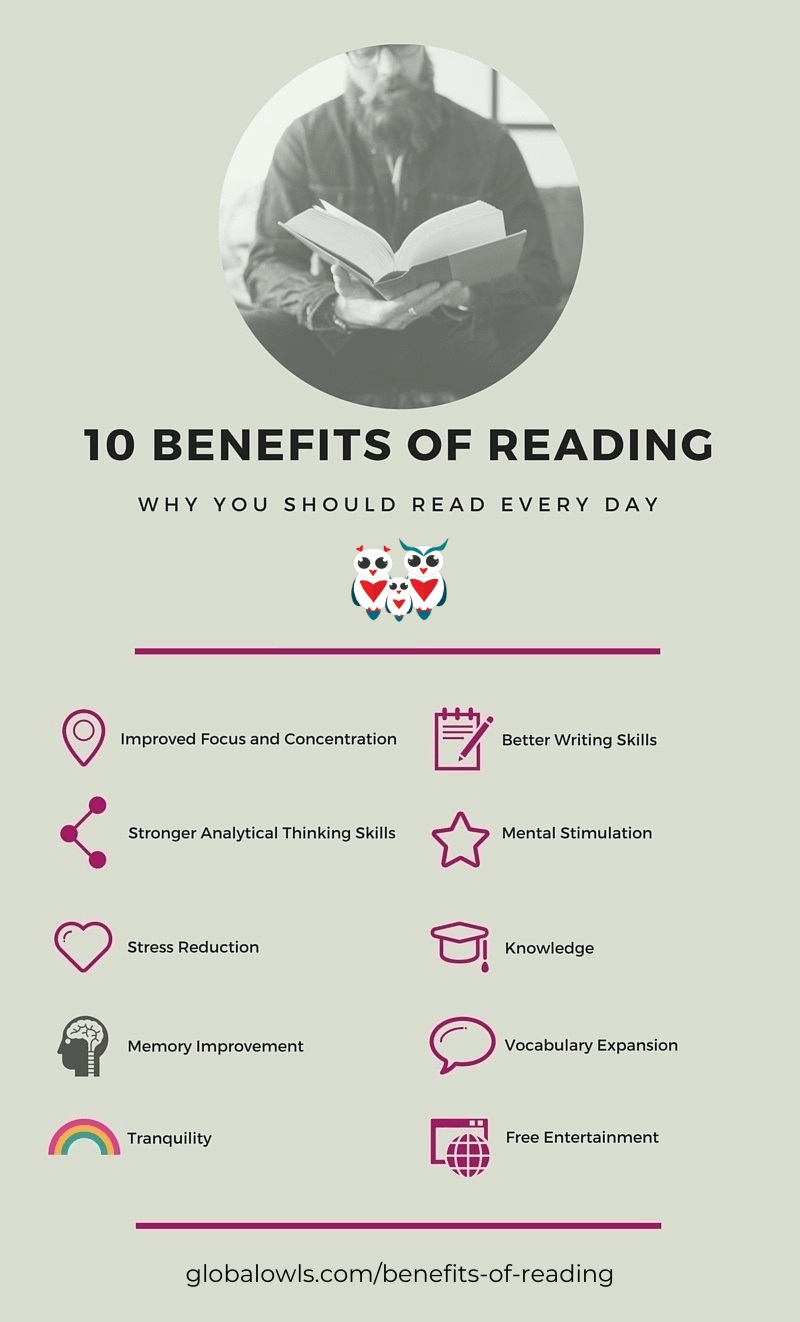
Besides the lessons you learn from reading books, here are the top 10 benefits of reading books in general.
Top 10 benefits of reading
References
abc news: Reading, Chess May Help Fight Alzheimer’s
Fisher Center For Alzheimer’s Research Foundation: Mental Stimulation Slows Alzheimer’s Progression
VeryWellMind: 10 Interesting Human Memory Facts You Should Know
How Reading Improves MemoryThe Wall Street Journal: Bibliotherapy: Reading Your Way To Mental Health
How to start reading more books
There are different type of books. Some educational books might cost you some more effort to read because, to get the most out of them, you’ll need to really go over the lessons you’ve learned.
There are also books that you can just read for pleasure. As seen in the image above, the 10 benefits of reading will apply to all books and magazines. Also books you read for entertainment.
As a reader, you probably don’t think of the great benefits of reading, but they are there even when you don’t realize it. From improved focus to better writing skills, reading is hugely beneficial in all aspects of our lives.
You can find books anywhere, from the library to bookstores and of course, also online on Amazon
FAQ
What Are the Cognitive Benefits of Reading Books?
Reading books enhances cognitive functions such as memory, focus, and concentration. It also stimulates mental processes involved in comprehension and critical thinking.
How Does Reading Books Affect Mental Health?
Reading books can reduce stress, improve mood, and provide a sense of relaxation. It also offers a form of escapism and can increase empathy and emotional intelligence.
Can Reading Books Improve Vocabulary and Language Skills?
Yes, regular reading significantly enhances vocabulary and language skills. It exposes readers to a wider range of words, phrases, and styles of writing, improving communication skills.
How Does Reading Books Benefit Children’s Development?
For children, reading books boosts cognitive and language development, enhances imagination, improves concentration, and can help in developing social and emotional understanding.
What Are the Benefits of Reading Books Before Bed?
Reading books before bed can help in winding down and relaxing, leading to improved sleep quality. It also offers a healthier alternative to screen time, which can negatively affect sleep.
Can Reading Books Increase Empathy and Understanding?
Reading, especially fiction, can increase empathy and understanding by allowing readers to experience different perspectives and emotions through the characters and stories.
What is the Role of Reading in Lifelong Learning?
Reading plays a crucial role in lifelong learning by providing continuous opportunities for knowledge acquisition, keeping the mind active and engaged, and fostering curiosity and a love for learning.
How Does Reading Books Influence Creativity?
Reading books stimulates the imagination, providing a rich source of inspiration and creative thinking. It opens the mind to new ideas, cultures, and possibilities.
What Are the Social Benefits of Reading Books?
Reading books can lead to increased socialization opportunities, such as book clubs and discussion groups, and can improve conversational skills and cultural awareness.
Can Reading Books Help in Career Development?
Reading books related to one’s career or industry can enhance professional knowledge and skills, keep one updated with current trends and innovations, and contribute to career growth and development.
How Does Reading Fiction Differ from Non-Fiction in Terms of Benefits?
Reading fiction often enhances imagination, empathy, and emotional intelligence, while non-fiction tends to improve knowledge, analytical skills, and awareness of real-world issues.
Can Reading Books Improve Memory and Brain Function?
Yes, reading books can improve memory and brain function. It stimulates mental activities that enhance cognitive reserve and delay memory decline, especially in older adults.
What Impact Does Reading Have on Stress Reduction?
Reading has a significant impact on stress reduction. It can lower heart rate and ease tension in muscles, providing a peaceful escape that helps in relieving mental stress.
How Can Reading Books Contribute to Academic Success?
Reading books contributes to academic success by expanding vocabulary, improving comprehension and writing skills, and providing a broader understanding of various subjects and concepts.
Is There a Link Between Reading and Success in Professional Life?
There is a link between reading and professional success. Habitual reading fosters lifelong learning, keeps individuals informed and adaptable, and enhances critical thinking skills beneficial in professional settings.
How Does Reading Enhance Cultural Awareness and Global Understanding?
Reading books from diverse authors and cultures increases cultural awareness and global understanding, providing insights into different lifestyles, traditions, and perspectives.
What Are the Benefits of Audiobooks Compared to Traditional Reading?
Audiobooks offer the convenience of multitasking and can be a valuable tool for people with visual impairments or reading difficulties. They also help in improving listening skills and can be more accessible for certain learners.
Can Reading Aloud to Children Affect Their Development?
Reading aloud to children can significantly affect their development. It improves their listening and language skills, enhances concentration, and strengthens the parent-child bond.
How Does Regular Reading Influence Writing Abilities?
Regular reading influences writing abilities by exposing readers to various writing styles, enhancing vocabulary, and providing a better understanding of grammar, structure, and storytelling techniques.
What Are the Long-Term Benefits of Being an Avid Reader?
The long-term benefits of being an avid reader include a lifelong habit of learning, improved mental agility, increased cultural literacy, better memory retention, and a higher level of emotional intelligence and empathy.
How Does Reading Fiction Books Foster Creativity?
Reading fiction stimulates the imagination by presenting new worlds, ideas, and perspectives, which can spark creative thinking and inspire readers to think outside their usual boundaries.
Can Reading Help in Building Better Communication Skills?
Yes, reading enhances communication skills by exposing readers to effective ways of expressing ideas, emotions, and narratives, which can be translated into their own verbal and written communications.
How Does Reading Influence Critical Thinking and Analytical Skills?
Reading, especially complex texts and non-fiction, challenges the brain to analyze, question, and deduce, thereby improving critical thinking and analytical skills.
What Are the Emotional Benefits of Reading Beloved Childhood Books?
Revisiting beloved childhood books can provide comfort, nostalgia, and a sense of stability, and can also offer deeper insights when read from an adult perspective.
How Can Reading Historical Books Enhance Understanding of the Present?
Reading historical books helps in understanding the context and developments that have shaped the present world, offering insights into current societal structures, cultures, and global events.
Is There a Benefit to Reading Across a Variety of Genres?
Reading across a variety of genres exposes individuals to different styles, ideas, and experiences, broadening their perspectives, enhancing adaptability in thinking, and increasing empathy and cultural understanding.
How Does Reading Impact Emotional Intelligence?
Reading, particularly fiction, allows readers to experience a range of emotions and perspectives through characters’ experiences, thus enhancing their own emotional intelligence and empathy.
Can Reading Books Play a Role in Mental Wellness and Therapy?
Books, particularly those related to personal development or those offering escapism, can play a significant role in mental wellness and can be used therapeutically to provide solace, guidance, and a means of self-reflection.
What Is the Role of Reading in Personal Growth and Self-Improvement?
Reading plays a vital role in personal growth and self-improvement by providing knowledge, inspiring change, offering different viewpoints, and encouraging introspection and self-analysis.
How Does Reading Before Bed Affect Sleep Quality Compared to Screen Time?
Reading before bed, especially print books, is known to be more conducive to good sleep quality compared to screen time, which can emit blue light and stimulate the brain in ways that can disrupt sleep patterns.
Read more inspiring books:
- Top Fiction and Non-Fiction Books
- Top Marketing Books
- Top Sustainability Books
- Top Woman Empowerment Books
- Top Lead Generation Books
- Top Nonprofit, Charity, NGO Books
- Top Technology Books
- Top Artificial Intelligence Books
- Top Social Media Marketing Books
- Top Entrepreneur Books
- Top Fitness Books
- Top Web Design Books
- Top Books for Developers
What are the Benefits of Audio Books
Next to reading books, you can also listen to awesome Audio Books. Here are just a couple of benefits of listening to audio books:
- Convenience and Multitasking: Audio books allow listeners to enjoy books while engaging in other activities like driving, exercising, or doing household chores, effectively multitasking.
- Accessibility: They are particularly beneficial for people with visual impairments, dyslexia, or other reading disorders. Audio books make reading accessible to those who might struggle with traditional printed text.
- Enhanced Comprehension and Retention: Listening to a book can aid in comprehension, especially for auditory learners. The use of tone, inflection, and emphasis by the narrator can enhance understanding of the material.
- Variety of Uses: Audio books are useful for language learning, as they help with pronunciation and language immersion. They can also be a tool for enjoying literature in a foreign language.
- Entertainment and Engagement: Professional narration often includes character voices and emotional delivery, which can bring the story to life in a captivating way, potentially offering a more immersive experience than reading text.
- Portability: With digital audio books, you can carry a vast library on your mobile device, making it easy to switch between books or pick up where you left off, regardless of location.
- Improved Literacy Skills: For children, audio books can improve listening skills, vocabulary, and pronunciation. They can also instill a love of stories and literature from an early age.
- Reduced Eye Strain: Listening to audio books can be a relief for people who spend a lot of time in front of screens or deal with eye strain from reading small print.
- Sleep Aid: For some, listening to audio books can be a calming activity before sleep, especially with content designed for relaxation or sleep induction.
- Variety and Choice: Many audio books are available in different formats and genres, offering a wide range of choices for all types of listeners, from bestsellers and classics to self-help and educational content.
More Audio Book Lineups
- Top Fiction and Non-Fiction Audio Books
- Top Gardening Audio Books
- Top Social Media Marketing Audio Books
- Top Digital Marketing Audio Books
- Top Fitness Audio Books
- Top Web Design Audio Books
- Top Audio Books for Developers
- Top Christian Audio Books
- Top Self-Help / Self-Improvement Audio Books
- Top Bodybuilding Audio Books
- Top Artificial Intelligence (AI) Audio Books
- Top Audio Books for Finding your Purpose
- Top Audio Books for Entrepreneurs
- Top Finance Audio Books
- Top Healthy Foods Audio Books
- Top Nonprofit, Charity, NGO Audio Books