AI and the Omni-Channel Marketing Ecosystem: A Comprehensive Guide

In today’s rapidly evolving digital landscape, businesses are facing the challenge of reaching customers across a multitude of channels and devices.
Omni-channel marketing has emerged as a strategy that enables brands to engage with their audience seamlessly across various touchpoints. However, achieving success in omni-channel marketing requires more than just a presence on multiple platforms; it demands the intelligent application of artificial intelligence (AI).
In this comprehensive guide, we’ll explore the intersection of AI and omni-channel marketing, revealing how businesses can harness the power of AI to create more effective, personalized, and cohesive customer experiences.
Free AI Marketing Masterclass
Let’s start with a Free AI Marketing Masterclass. If you want to really become more successful with AI Marketing, you need to integrate AI into your Marketing mix. Check out how AI can help you tell better stories in the free masterclass. Enjoy!
Chapters
- Free AI Marketing Masterclass
- Understanding Omni-Channel Marketing
- The Role of AI in Omni-Channel Marketing
- Case Studies
- Data as the Foundation
- Personalization at Scale
- Seamless Customer Journeys
- Predictive Analytics and Decision-Making
- Challenges and Ethical Considerations
- Preparing for AI-Enhanced Omni-Channel Marketing
- FAQ
Understanding Omni-Channel Marketing

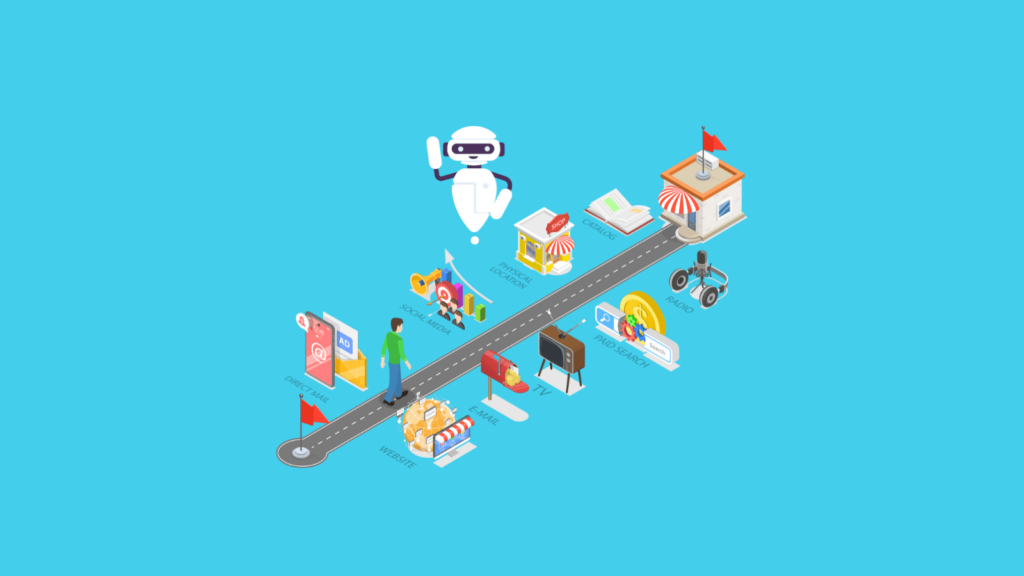
Omni-channel marketing is a strategy that integrates various marketing channels, both online and offline, to provide customers with a consistent and unified experience, making it a crucial component when creating a use case diagram. It recognizes that consumers often use multiple devices and platforms during their purchasing journey, and aims to create a seamless and connected experience across all of them.
In the modern marketing landscape, omni-channel is no longer a luxury but a necessity. Consumers expect brands to be present and consistent on all the channels they use, whether it’s a website, mobile app, social media, email, or even in-store experiences. This approach not only enhances customer satisfaction but also drives brand loyalty and revenue growth.
The Role of AI in Omni-Channel Marketing
At the heart of successful omni-channel marketing is the intelligent use of AI. Artificial intelligence encompasses a range of technologies, including machine learning and natural language processing, which empower businesses to analyze data, make predictions, and automate tasks at a scale and speed that would be impossible for humans alone.
AI can help marketers understand customer behavior, preferences, and intent across different channels. It can analyze massive datasets in real time, enabling businesses to tailor their marketing messages and offers to individual customers. This level of personalization is crucial in today’s competitive market, where consumers expect brands to understand and cater to their unique needs.
Case Studies
Revolutionizing Retail Discovery: How Nordstrom Masters Pinterest Integration
Nordstrom has been a pioneer in the retail landscape since 2013, leveraging Pinterest to enhance the in-store shopping experience. They began by showcasing popular Pinterest items through in-store displays. In 2018, Nordstrom took their Pinterest integration to the next level with the introduction of Pinterest’s innovative “Pincode” feature.

This feature allows shoppers to simply scan a code and gain instant access to a dedicated Pinterest board. The process is elegantly straightforward: shoppers scan the Pincode while in-store, and they are seamlessly directed to a curated Pinterest board featuring an array of gifts priced under $100. This integration not only emphasizes convenience but also aims to elevate the overall shopping experience.
Sephora Omnichannel Marketing
Sephora excels in omnichannel marketing by seamlessly integrating online and in-store experiences. In physical stores, customers enjoy consistent brand experiences, including expert advice, informed sales staff, free makeovers, and a wide range of products. Online, Sephora customers can access their Beauty Bag accounts to track purchases, scan items in-store, view tutorials, maintain wish lists, and more. This approach has led to a remarkable approximately 100% increase in mobile orders for the leading beauty retailer.

Data as the Foundation
To leverage the power of AI in omni-channel marketing, businesses must have a solid foundation of data. Data collection, integration, and quality assurance are critical components of this foundation. It’s essential to gather data from all relevant touchpoints and ensure its accuracy and consistency. Incorporating OCR software for automated data extraction from documents and images can significantly streamline the data collection and integration process.
Once the data is in place, AI-driven data analytics can uncover valuable insights that drive marketing strategies. For example, AI can identify patterns in customer behavior, such as preferred channels, purchase timing, and product preferences. These insights enable businesses to craft highly targeted and relevant marketing campaigns.
Personalization at Scale
One of the primary advantages of AI in omni-channel marketing is the ability to achieve hyper-personalization at scale. Traditional marketing approaches often relied on segmentation, dividing customers into broad categories. AI allows for the creation of micro-segments, where each customer is treated as an individual with unique preferences.
By analyzing a customer’s past behavior and interactions, AI algorithms can predict their future needs and interests. For instance, an e-commerce platform can recommend products based on a user’s browsing history and purchase patterns. This level of personalization not only enhances the customer experience but also create decision tree resulting in drives higher conversion rates and revenue.
Seamless Customer Journeys
In an omni-channel environment, customers move fluidly between channels. They might start browsing products on a mobile app, continue on a desktop computer, and complete the purchase in-store. Creating a seamless digital customer journey across these touchpoints is a fundamental goal of omni-channel marketing.
AI plays a crucial role in optimizing customer journeys. It can predict user behavior and preferences, allowing businesses to provide relevant content, product recommendations, and promotions at each step of the journey. Chatbots and virtual assistants powered by AI can provide real-time assistance and information, guiding users through their decision-making process.
Predictive Analytics and Decision-Making
AI also enhances decision-making in omni-channel marketing. Predictive analytics, powered by machine learning, enables businesses to forecast customer behavior with remarkable accuracy. For example, AI can predict which customers are likely to churn, allowing proactive retention efforts.
Moreover, AI-driven marketing attribution models help businesses understand the customer conversion path. They can determine which touchpoints and channels contribute most significantly to conversions, enabling smarter allocation of marketing resources.
Challenges and Ethical Considerations
While AI offers tremendous benefits in omni-channel marketing, it also presents challenges and ethical considerations. Data privacy and security are paramount concerns. Businesses must ensure that customer data is handled responsibly and in compliance with privacy regulations.
Transparency in AI decision-making is another important ethical consideration. Customers have the right to know when AI is used to make decisions that affect them. Avoiding bias in AI algorithms is also critical to ensure fair and equitable treatment of all customers.
Preparing for AI-Enhanced Omni-Channel Marketing
To harness the power of AI in omni-channel marketing, businesses should take several steps:
Invest in AI Technology: Explore AI tools and platforms suitable for your business size and industry.
Data Management: Ensure robust data collection, integration, and quality assurance processes.
Skills and Training: Invest in training and hiring talent with AI expertise.
Testing and Optimization: Continuously test and optimize AI-driven marketing campaigns for better results.
Ethical Compliance: Implement ethical AI practices and ensure compliance with data protection regulations.
The Study Unveils Shifting Dynamics in the Omnichannel Experience with AI Integration.
The outcomes of study shed light on the transformation of the omnichannel experience (OCE) with the incorporation of AI systems. Interestingly, the findings underscore how specific dimensions of the OCE gain or lose significance in this context. Notably, some dimensions of the OCE become closely intertwined with experiential facets, such as personalization, consistency, and flexibility. Conversely, integration and connectivity emerge as essential internal competencies that underpin the omnichannel strategy’s success.
Conclusion
In today’s highly competitive marketplace, omni-channel marketing is no longer an option but a necessity for businesses aiming to engage and keep customers effectively. When combined with the power of artificial intelligence, omni-channel marketing becomes a force multiplier, enabling brands to deliver highly personalized, context-aware, and frictionless experiences across channels.
As AI continues to advance, businesses that embrace AI-driven omni-channel strategies will be better positioned to thrive in an ever-changing digital landscape, delivering exceptional value to their customers and staying ahead of the competition
FAQ
What is OmniChannel marketing?
OmniChannel marketing is a strategic approach that creates a seamless customer experience across multiple channels, including online, in-store, mobile, and social media, ensuring brand consistency and personalized interaction at every touchpoint.
How does OmniChannel marketing differ from multichannel marketing?
While multichannel marketing uses multiple channels to reach customers, OmniChannel marketing integrates these channels to provide a cohesive and interconnected customer experience, where each channel works in synergy with the others.
What are the key benefits of implementing an OmniChannel marketing strategy?
Key benefits include improved customer experience, increased customer loyalty, higher customer retention rates, and better data collection for more effective and personalized marketing efforts.
How can businesses effectively implement an OmniChannel marketing strategy?
Implement an effective strategy by understanding your customer’s journey, integrating your marketing channels, utilizing data analytics for personalized experiences, and ensuring consistent branding across all channels.
What role does technology play in OmniChannel marketing?
Technology is crucial in OmniChannel marketing for integrating different marketing channels, automating personalized customer communications, and collecting and analyzing customer data to inform marketing strategies.
How important is personalization in OmniChannel marketing?
Personalization is extremely important as it tailors the shopping experience to individual customers based on their preferences, behaviors, and past interactions, leading to higher engagement and conversion rates.
Can small businesses benefit from OmniChannel marketing? How?
Yes, small businesses can benefit by using OmniChannel strategies to provide personalized and seamless experiences for their customers, improving customer satisfaction and loyalty, even with limited resources.
What challenges do businesses face when shifting to an OmniChannel marketing approach?
Challenges include integrating various marketing channels, ensuring consistent branding and messaging across platforms, adapting to evolving customer behaviors, and managing and analyzing large sets of data.
How does social media fit into an OmniChannel marketing strategy?
Social media acts as a crucial touchpoint in an OmniChannel strategy, allowing businesses to engage with customers, gather insights, and drive traffic to other channels like websites or physical stores.
What metrics should be used to measure the success of an OmniChannel marketing strategy?
Measure success using metrics like customer retention rates, customer lifetime value, conversion rates across different channels, and overall customer satisfaction and feedback.
How does OmniChannel marketing enhance customer engagement?
OmniChannel marketing enhances customer engagement by providing a consistent, unified brand experience across all channels, allowing customers to interact with the brand in a way that’s most convenient for them.
What is the role of content marketing in an OmniChannel strategy?
Content marketing plays a pivotal role in an OmniChannel strategy by creating cohesive and relevant content that resonates across different channels, aligning with the overall brand narrative and customer journey.
How can businesses ensure brand consistency in OmniChannel marketing?
Ensure brand consistency by maintaining a uniform tone, style, and messaging across all channels. This includes visual elements, communication style, and the overall customer experience.
Can OmniChannel marketing be applied to both online and offline channels?
Yes, OmniChannel marketing applies to both online and offline channels, integrating digital platforms like websites and social media with physical touchpoints such as retail stores or events for a cohesive experience.
What’s the importance of mobile optimization in OmniChannel marketing?
Mobile optimization is crucial as a significant portion of customers engage with brands through mobile devices. Ensuring a seamless mobile experience is key to successful OmniChannel marketing.
How does customer feedback contribute to an effective OmniChannel marketing strategy?
Customer feedback helps businesses understand the effectiveness of their OmniChannel strategy, identify areas for improvement, and ensure that their efforts align with customer expectations and preferences.
What strategies can be used to integrate different marketing channels effectively?
Effective integration strategies include using a centralized marketing platform, aligning goals and messaging across channels, and ensuring all departments and teams are coordinated in their efforts.
How do customer data and analytics support OmniChannel marketing?
Customer data and analytics provide insights into customer behaviors, preferences, and patterns across channels, enabling more targeted and personalized marketing efforts.
What is the role of AI and machine learning in OmniChannel marketing?
AI and machine learning play a significant role in automating personalized customer experiences, optimizing marketing campaigns across channels, and analyzing large sets of customer data for deeper insights.
How can businesses overcome the challenge of channel integration in OmniChannel marketing?
Overcome channel integration challenges by investing in the right technology and tools that facilitate communication and data sharing across channels, and by fostering a collaborative organizational culture focused on a unified customer experience.
How does OmniChannel marketing impact the customer buying journey?
OmniChannel marketing streamlines the customer buying journey by providing a consistent and integrated experience across all channels, allowing customers to move seamlessly from one channel to another while making purchasing decisions.
What is the significance of seamless payment solutions in OmniChannel marketing?
Seamless payment solutions are vital as they provide a smooth and hassle-free checkout process, crucial for customer satisfaction and retention, regardless of the channel through which the purchase is made.
How can businesses tailor their messaging in an OmniChannel approach?
Businesses can tailor their messaging by leveraging customer data to create personalized and relevant communications that resonate with each customer, based on their preferences and interactions across different channels.
Can OmniChannel marketing help in cross-selling and upselling? How?
Yes, OmniChannel marketing can facilitate cross-selling and upselling by providing a unified view of the customer, enabling targeted offers and recommendations based on their purchasing history and preferences across channels.
What are the best practices for managing inventory in an OmniChannel strategy?
Best practices include using integrated inventory management systems, maintaining real-time visibility of stock levels, and ensuring inventory synchronization across all sales channels to meet customer demand effectively.
How do social listening and monitoring enhance OmniChannel marketing strategies?
Social listening and monitoring provide insights into customer opinions, trends, and feedback across social platforms, helping businesses to adapt their OmniChannel strategies to meet customer expectations and needs.
What is the role of customer service in an effective OmniChannel marketing strategy?
Customer service is crucial, as it should be consistent and high-quality across all channels, providing quick and effective solutions, thereby enhancing the overall customer experience and brand loyalty.
How can businesses measure customer satisfaction in an OmniChannel approach?
Measure customer satisfaction through surveys, feedback forms, net promoter scores, and analyzing customer interactions and reviews across various channels, helping to gauge the effectiveness of the OmniChannel strategy.
What challenges do businesses face in integrating online and offline channels in OmniChannel marketing?
Challenges include ensuring data consistency, managing different technological platforms, aligning internal teams and processes, and providing a unified customer experience across physically disparate channels.
How does OmniChannel marketing cater to the evolving expectations of modern consumers?
OmniChannel marketing caters to modern consumers by providing convenience, personalization, and a seamless experience across all channels, meeting their expectations for efficient, accessible, and tailored shopping experiences.
Improve your Marketing with the Power of AI
See how you can start with AI Marketing and reach your goals faster than ever before. Check out the Tips, Strategies, AI Tools, Masterclass, Courses, and Community. Unleash the true potential of your brand with the help of AI.