Catchy Writer Blog Post Title Examples [+ Free AI Tools]
Create Catchy Blog Post Titles for your Writer Blog or Website with our examples and Free AI Blog Title Generators.

Grow your Writer Blog’s website traffic by creating better catchy and engaging blog post titles.
Check out our tips and tools and start improving today.
In this article
Why should Writer Blogs Write Great Blog Post Titles?
Once upon a time, there was a writer who had a passion for creating content that would captivate their readers. They spent hours crafting blog posts that were informative, entertaining, and thought-provoking. But despite their best efforts, they found that their blog wasn’t getting the traffic it deserved.
One day, the writer stumbled upon the power of great blog post titles. They realized that the title was the first thing their readers would see, and it could make all the difference in whether someone clicked on their post or scrolled past it.
The writer began to experiment with catchy and intriguing titles, using puns, alliterations, and other literary devices to draw in their readers. They found that their posts were getting more views, shares, and engagement than ever before. They were creating a community of readers who were excited to read their content and share it with others.
But the benefits of great blog post titles didn’t stop there. The writer found that their titles were helping them to establish themselves as an authority in their niche. They were able to differentiate themselves from other bloggers and show their readers that they had something unique to offer.
Through the power of storytelling, the writer learned that writing great blog post titles was more than just a marketing tactic. It was a way to connect with their audience, share their values, and create a loyal following. They continued to craft captivating titles and inspire others to join them on their journey towards creating content that made a difference.
AI Tool for Writer Blogs to Write Great Blog Post Titles
In order to come up with the best headline for your next Writing Article, you’ll need to create a list of potential titles and then select the best one. To help speed up that process and to improve creativity, check out how an AI-Powered Blog Title Generator can help.
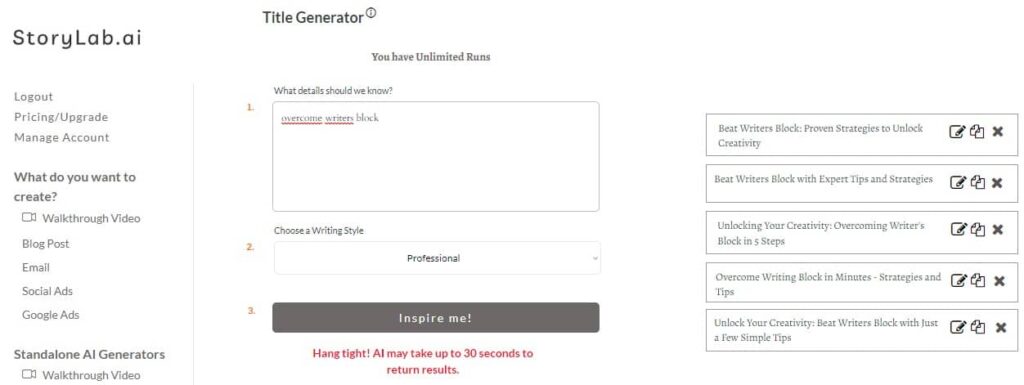
You simply enter what your blog post is about, choose a writing style, and click the ‘Inspire me!’ button. Here’s what that looks like:
For this example we’ve used the input:
‘Overcome Writer’s Block’
Benefits the AI-Powered Blog Title Generator
At a glance, here’s what the Blog Title Generator can do for you.
| 🤖AI modes | 13 writing styles |
 Improves Improves |
blog content, creativity, and more |
| 🦾Supports | 17+ Languages |
 Price Price |
Free and Premium |
Catchy Writer Blog Post Title Examples
- Beat Writers Block: Proven Strategies to Unlock Creativity
- Beat Writers Block with Expert Tips and Strategies
- Unlocking Your Creativity: Overcoming Writer’s Block in 5 Steps
- Overcome Writing Block in Minutes – Strategies and Tips
- Unlock Your Creativity: Beat Writers Block with Just a Few Simple Tips
- The Art of Storytelling: Tips and Techniques for Writers
- How to Find Your Writing Voice and Develop Your Style
- Overcoming Writer’s Block: Strategies to Get Your Creativity Flowing
- The Power of Words: Why Writing Matters More Than Ever
- Creating Memorable Characters: Tips and Techniques for Fiction Writers
- The Benefits of Keeping a Writing Journal: How to Boost Your Creativity and Productivity
- Crafting Compelling Dialogue: Techniques for Bringing Your Characters to Life
- How to Write a Novel: Tips and Tricks for Beginners
- The Importance of Editing: How to Polish Your Writing and Improve Your Craft
- The Benefits of Writing Every Day: How to Make Writing a Habit
- The Writer’s Journey: Navigating the Ups and Downs of the Creative Process
- The Art of Writing Short Stories: Tips and Techniques for Success
- The Role of Research in Writing: How to Gather and Use Information Effectively
- The Benefits of Writing Workshops and Critique Groups: How to Grow as a Writer
- Writing for the Web: How to Craft Engaging and SEO-Friendly Content
- The Power of Poetry: How to Express Yourself Through Verse
- Writing Memoir: How to Tell Your Life Story in Your Own Words
- The Importance of Self-Reflection in Writing: How to Dig Deep and Find Meaning
- Crafting Effective Headlines: How to Hook Your Readers with Your Titles
- The Benefits of Writing Prompts: How to Overcome Writer’s Block and Spark Your Imagination
- Writing for Children: Tips and Techniques for Creating Engaging Stories
- The Role of Social Media in Writing: How to Use Platforms to Connect with Readers and Grow Your Audience
- The Art of Writing Screenplays: Tips and Techniques for Success
- The Benefits of Writing Retreats: How to Recharge Your Creativity and Connect with Other Writers
- The Importance of Diversity in Writing: How to Write Inclusively and Authentically
- How to Build a Writing Routine: Tips and Strategies for Making Time for Your Craft
- The Benefits of Writing Conferences: How to Learn from Experts and Connect with Other Writers
- The Role of Collaboration in Writing: How to Work with Others to Bring Your Ideas to Life
- How to Write a Memoir: Tips and Techniques for Success
- The Power of Imagery: How to Use Descriptive Language to Bring Your Writing to Life
- Writing for Nonprofits: How to Craft Compelling Messages for a Cause
- The Benefits of Writing Communities: How to Find Support and Inspiration Online and Offline
- The Role of Story Structure in Writing: How to Create a Compelling Narrative
- How to Write a Blog: Tips and Tricks for Success
- The Power of Emotion: How to Use Feeling to Connect with Your Readers
- Writing for Social Change: How to Use Your Words to Make a Difference
- The Benefits of Writing Contests: How to Gain Exposure and Build Your Portfolio
- The Role of Simplicity in Writing: How to Communicate Clearly and Effectively
- Writing for Business: How to Craft Persuasive Messages for Your Audience
- The Power of Humor: How to Use Laughter to Engage Your Readers
- The Benefits of Writing for Therapy: How to Use Writing as a Tool for Healing
- How to Write a Book: Tips and Techniques for Success
- The Role of Conflict in Writing: How to Create Tension and Keep Your Readers Hook
- How to Write a Page-Turning Novel: Tips and Tricks for Success
- The Art of Dialogue: How to Write Conversations that Sound Natural
- Writer’s Block: How to Overcome It and Get Back to Writing
- The Power of Setting: How to Create a Compelling Location for Your Story
- The Secret to Writing Great Characters: How to Bring Them to Life
- The Pros and Cons of Self-Publishing vs. Traditional Publishing
- How to Create a Writing Routine That Works for You
- The Benefits of Writing Prompts: Sparking Creativity and Inspiration
- How to Edit Your Writing Like a Pro: Tips for Polishing Your Work
- The Importance of Reading for Writers: Why You Should Make Time for Books
- The Dos and Don’ts of Writing a Query Letter
- The Art of Show, Don’t Tell: How to Use Descriptions to Make Your Story Come Alive
- How to Write a Memorable Ending: Tips for Crafting a Lasting Impression
- The Benefits of Writing Groups: Finding Support and Feedback
- How to Write a Synopsis That Sells Your Book
- The Power of Research: How to Incorporate Facts into Your Fiction
- The Importance of Point of View: Choosing the Right Perspective for Your Story
- How to Write a Compelling Opening: Tips for Capturing Your Reader’s Attention
- The Benefits of Writing Retreats: Finding Inspiration and Focus
- How to Build a Platform as a Writer: Tips for Building Your Brand
- The Art of Short Stories: Tips for Crafting a Complete Tale in Fewer Words
- How to Write a Memoir: Tips for Sharing Your Life Story
- The Benefits of Writing Conferences: Connecting with Fellow Writers and Industry Experts
- The Power of Metaphors: How to Use Figurative Language to Enhance Your Writing
- The Importance of Authenticity in Writing: Finding Your Voice and Staying True to Yourself
- How to Write Effective Headlines: Tips for Creating Attention-Grabbing Titles
- The Art of Description: How to Use Sensory Details to Make Your Writing Come Alive
- How to Write a Series: Tips for Crafting a Story that Keeps Readers Coming Back
- The Benefits of Writing Workshops: Learning New Skills and Techniques
- How to Write for Different Audiences: Adapting Your Style and Tone
- The Power of Conflict: How to Use Tension to Drive Your Story Forward
- The Importance of Revision: How to Polish Your Writing to Perfection
- How to Write Effective Blog Posts: Tips for Engaging Your Audience
- The Art of Humor: How to Use Comedy to Enhance Your Writing
- How to Write a Screenplay: Tips for Adapting Your Story for Film or TV
- The Benefits of Writing Contests: Finding Recognition and Opportunities
- The Power of Imagery: How to Use Description to Create Vivid Mental Images
- The Importance of Emotion in Writing: How to Create Characters that Connect with Readers
- How to Write a Mystery: Tips for Crafting a Compelling Whodunit
- The Art of Prose: How to Write Beautiful Sentences and Paragraphs
- How to Write a Children’s Book: Tips for Crafting Stories for Young Readers
- The Benefits of Writing Retreats: Finding Time and Space to Focus on Your Craft
- The Power of Theme: How to Use a Central Idea to Tie Your Story Together
Other Catchy Blog Title Examples
- Catchy Travel Blog Title Examples
- Catchy Real Estate Blog Title Examples
- Catchy Agriculture Blog Title Examples
- Catchy Food Blog Post Title Examples
- Catchy Finance Blog Post Title Examples
- Catchy E-Commerce Blog Title Examples
- Catchy Fundraising Blog Title Examples
- Catchy Money Blog Title Examples
- Catchy Fashion Blog Title Examples
- Catchy Gardening Blog Title Examples
- Catchy Sustainability Blog Title Examples
- Catchy Vegan Blog Title Examples
- Catchy Fitness Blog Title Examples
- Catchy Writer Blog Title Examples
- Catchy Technology Blog Title Examples
- Catchy Nonprofit Blog Title Examples
Check out all our Digital Marketing Examples and get better results!
Create more and better content
Check out the following resources and Grow!