Effective Lifecycle Email Marketing for Nonprofits (Strategies + Examples)
Do you want to gain more email subscribers for your nonprofit organization and keep these supporters giving again and again? Email doesn’t have to be complicated. Follow these tips below.

Email marketing is an effective tool for nonprofits. While many might try to argue that email marketing is dead, this couldn’t be further from the truth. As a nonprofit, you need a way to create real-life relationships with your donors and to build a larger reach with your audience. Email is an effective way to not only develop a loyal donor base and drive more donations but to also spread awareness.
Many of these lifecycle campaigns can even be automated to drive donations and support without ongoing attention. In this guide, we’ll address many strategies and examples you can use to further your mission for good.
1. Create Personalized & Accurate Content
Nobody wants to read an email that feels like it’s written by a machine. In this day and age, it’s not unlikely that emails are autogenerated by artificial intelligence and other machine learning, so it’s more important than ever to be authentic and personal with your content as a nonprofit.
To start, use a client management tool to keep track of donors and those who sign up for more information. Segment these lists by interests. Some might be interested in learning more while others might have already made a donation in the past.
From there, you’re equipped to send highly personalized, authentic emails customized to wherever your supporters are in their journey. Pencils for Promise, for example, welcomes new donors with a friendly email.

2. Create an Easy to Find Signup Form
Your signup form should be the easiest thing on your website to find. Generating more email signups isn’t hard at all for nonprofits. Nonprofit email lists grow an average of 10% each year, a crazy statistic in the digital marketing world! Remember, it’s about quality over quantity.
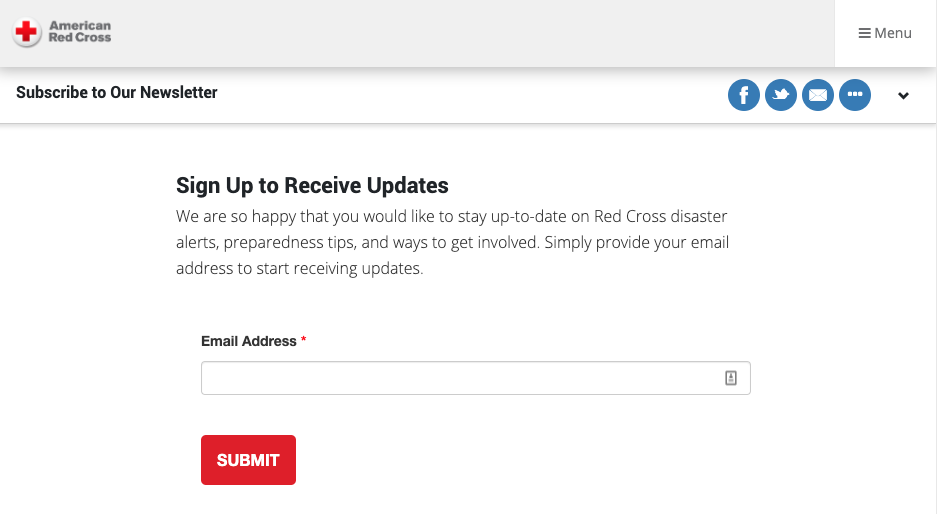
The American Red Cross makes it simple for visitors to sign up for newsletters and updates. Users only need to input their email to get started, though there’s also space to add additional information. The simpler the process, the more conversions.
3. Deliver Valuable Messages
As a nonprofit, it’s tempting to share every possible update. You’re grateful to your donors, and you want them to feel involved every step of the way. You need a compelling message that matches your compelling cause.
First, be personal. Many content marketing guides out there focus on the importance of storytelling. That applies to emails as well. Don’t forget about those segmented email lists we talked about earlier. Include things that people want to know about, like any of these ideas below:
- Event Invitations – Do you have an event coming up? If so, invite your donors to join you. From fundraising events to opening ceremonies, these are a great chance to get people involved.
- Newsletters – Remember to keep these newsletters targeted and valuable. Include statistics about past donations as well as information about your organization’s success. Additionally, ensuring that your email communications pass through an SPF checker can help maintain their legitimacy and prevent them from being flagged as spam.
- Donation Requests – Of course, you’ll want to send an announcement email and remind your donors to make an additional donation. These are more successful when shown to users who have already demonstrated an interest in similar campaigns.
- Thank you emails – Last but not least, send follow-up emails thanking your donors and supporters for their ongoing contributions.
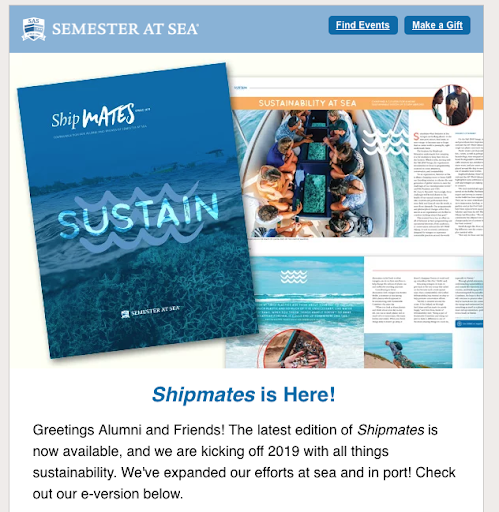
Below, Semester at Sea, a nonprofit that supports a global classroom, encourages past donors to download their latest version of their sustainability guide. This guide shows how far they’ve come to expand their sustainability both at sea and in port. The guide is available for free to past donors via email.
4. Write great email subject lines and copy
You have worked hard to gain email subscribers over the years. To get the most out of your efforts, you need to make sure people actually open your emails, get value out of them, and don’t unsubscribe.
If you need a tool to help you brainstorm subject lines and even email copy, check out StoryLab.ai’s copy generators.
You can access their Email Subject Line Generator here. If you’re looking to get help with the actual copy of the email, check out their Email Copy Generator.
All you need to do is to create a free account and describe what your subject line or email is about and the tool will give you suggestions. You get 25 runs (125 outputs) for free and if you need more, you can upgrade for $7.
5. Automated Workflow
Since you likely don’t have time to send this many emails on a regular basis, why not automate as many as possible. While some will depend on upcoming events and donation requests, email marketing tools can handle much of the automation in just a few clicks.
Start with the easiest emails to automate which are the welcome, thank you, and follow-up emails. For the welcome email, send an email immediately after someone signs up for the email list. This can be as simple as introducing your nonprofit and what it is you do.
Next, send a thank you email immediately after someone makes a donation. This automatic praise and thanks will show your organization cares about even the smallest contributions. Finally, automate a series of follow-up emails on a regular basis to retain your supporters, whether you send a donation reminder or identify new ways to give.
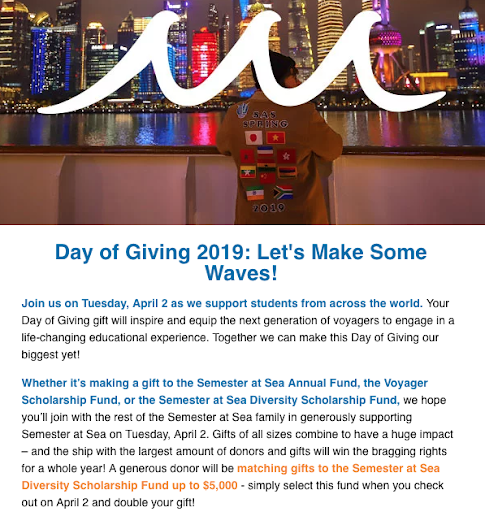
Again, see how Semester at Sea retains past donors with regular, planned days of giving throughout the year. Through these emails, the organization encourages everyone to come together to give whatever they can to the next generation of shipboard education.
Final Thoughts
These strategies above will guarantee not only that you gain more email subscribers for your organization, but that you keep these supporters giving again and again. Email doesn’t have to be complicated. In fact, as you can see about, much of it can be automated to lessen your own workload.
As long as you’re creating value, sharing your story, and staying authentic, you’re doing something right. Nonprofits have a cause to share with the world. Emails help you tell your story directly and on a personal level.
FAQ
Q: What is lifecycle email marketing for nonprofits?
It’s a strategy that involves sending targeted emails to donors and supporters at different stages of their relationship with the nonprofit, from initial engagement to long-term retention.
Q: How does lifecycle email marketing benefit nonprofits?
This approach helps nonprofits nurture donor relationships, increase engagement, and boost fundraising efforts by delivering personalized communication throughout the donor journey.
Q: What are the key stages in a donor’s lifecycle for email marketing?
Key stages include initial contact or awareness, first-time donation, ongoing engagement, repeat donations, and advocacy or ambassadorship.
Q: How can nonprofits effectively segment their email lists for lifecycle marketing?
Segmentation can be based on donor behavior, donation history, event participation, and other engagement metrics to tailor messages to each group’s specific interests and interaction level.
Q: What type of content is effective for initial engagement emails?
Initial engagement emails should focus on storytelling, impact showcases, and mission statements to connect emotionally with potential donors and volunteers.
Q: How can email marketing nurture first-time donors?
For first-time donors, emails should express gratitude, provide impact updates, and offer additional ways to get involved, fostering a deeper connection with the cause.
Q: What strategies work best for ongoing donor engagement emails?
Ongoing engagement can be fostered with regular updates, stories of success, volunteer opportunities, and invitations to events or webinars.
Q: How should nonprofits approach repeat donors in their email marketing?
Repeat donors should receive acknowledgment for their continued support, personalized updates, and information on sustained giving programs or legacy donations.
Q: Can lifecycle email marketing aid in converting donors into advocates?
Yes, by providing engaging content, sharing advocacy opportunities, and encouraging social sharing, nonprofits can encourage donors to become advocates for their cause.
Q: What role does automation play in lifecycle email marketing for nonprofits?
Automation plays a crucial role in ensuring timely and consistent communication, allowing for personalized messages to be sent based on specific triggers or donor actions.
Q: How important is personalization in lifecycle email marketing for nonprofits?
Personalization is crucial as it makes each donor feel valued and recognized, increasing the likelihood of continued engagement and support.
Q: What are some best practices for designing lifecycle emails?
Effective design practices include a clear call to action, visually appealing layout, mobile-friendly design, and incorporating the nonprofit’s branding elements.
Q: How can nonprofits measure the success of their lifecycle email marketing campaigns?
Success can be measured through metrics like open rates, click-through rates, conversion rates, and the growth in donor engagement and donations over time.
Q: Can lifecycle email marketing help in donor re-engagement?
Yes, targeted re-engagement emails can revive interest and participation among lapsed donors by updating them on new developments and reiterating the impact of their support.
Q: What type of content is effective for milestone recognition in lifecycle emails?
For milestones like anniversaries of support or significant donation levels, content that acknowledges and celebrates the donor’s contributions can be very effective.
Q: How frequently should nonprofits send emails in a lifecycle campaign?
Frequency should be balanced to keep donors informed and engaged without overwhelming them, tailored to each segment’s preferences and engagement levels.
Q: Should lifecycle email marketing strategies differ for major donors?
Yes, major donors often warrant a more personalized and direct approach, with content tailored to their specific interests and level of involvement.
Q: How can storytelling be incorporated into lifecycle email marketing?
Storytelling can be used to convey the impact of donations, share beneficiary stories, and create emotional connections that inspire ongoing support.
Q: What role does feedback play in lifecycle email marketing?
Collecting feedback through emails can provide valuable insights into donor satisfaction and preferences, helping to refine and improve future communication strategies.
Q: Are there specific compliance or legal considerations in lifecycle email marketing for nonprofits?
Nonprofits must comply with email marketing laws and regulations, such as CAN-SPAM Act requirements, which include providing clear opt-out options and accurate sender information.
Q: How can nonprofits use lifecycle email marketing for event promotion?
Emails can be targeted to different donor segments to promote events, with personalized invitations based on past event participation or interests.
Q: What is the role of welcome emails in a donor lifecycle?
Welcome emails play a crucial role in onboarding new donors or subscribers, setting the tone for future communication and beginning the relationship-building process.
Q: How can automation be used to acknowledge special occasions like donor anniversaries?
Automation can be set up to send personalized messages on donor anniversaries or birthdays, enhancing the personal connection between the donor and the nonprofit.
Q: Can lifecycle email marketing be integrated with social media campaigns?
Yes, email marketing can be integrated with social media to create a cohesive multi-channel campaign, encouraging donors to engage on various platforms.
Q: How important is consistency in messaging across the donor lifecycle?
Consistency in messaging is vital to maintain a coherent brand voice and message, reinforcing trust and recognition among donors.
Q: What strategies can be used to upsell or cross-sell in lifecycle emails?
Strategies include suggesting higher donation tiers, recurring donation programs, or involvement in other areas like volunteering, based on the donor’s past engagement.
Q: How can nonprofits use email segmentation to reactivate dormant donors?
Segmentation allows nonprofits to identify and target dormant donors with specific re-engagement messages, addressing their reasons for lapsing and inviting them to reconnect.
Q: What kind of storytelling elements work well in lifecycle emails?
Elements like beneficiary testimonials, success stories, and behind-the-scenes insights can create compelling narratives that resonate with donors.
Q: How can A/B testing improve lifecycle email campaigns?
A/B testing different elements like subject lines, email layouts, and calls to action can help identify the most effective strategies for engaging donors.
Q: Are there any specific content strategies for year-end giving campaigns in lifecycle emails?
Year-end campaigns can focus on the impact made throughout the year, tax-deductible donation benefits, and the urgency of meeting annual goals, all tailored to the lifecycle stage of the donor.
Author Bio:
 Ashley Lipman is an award-winning writer who discovered her passion in providing creative solutions for building brands online. Since her first high school award in Creative Writing, she continues to deliver awesome content through various niches.
You have a story to tell. We want to help.
Let’s create memorable content and reach tens of thousands of people.